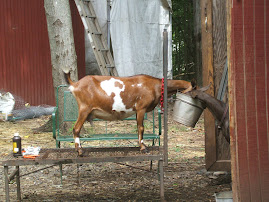
Cheese is made when milk separates into curds and whey. But how do you get a liquid to become solid? Yes, I know you can freeze a liquid to make a solid but that would not work if you are trying to make cheese. Milk can be coagulated many different ways, some of which are simple and others confusing
Milk can be coagulated by the addition of acid such as lemon juice, vinegar, or citric acid. This raises the PH of the milk and causes small, soft curds to form. Acidification can be used to make fresh cheese that included heating the curd. This is how lemon cheese, Ricotta, and paneer are made. These are very simple quick cheeses which anyone can make at home.
Time can coagulate milk and will create a product know as Bonny Clabber. Bonny Clabber is sour raw milk that is thickly curdled and comes from the Gaelic words bainne which means milk and claba which means thick. It is similar to yogurt or Quark and has a sour flavor. This is a traditional food enjoyed in the American South as well as Scotland and Ireland. But time will not produce a strong curd for making hard or aged cheeses. If you want to make cheddar you need rennet.
Rennet is a complex enzyme that occurs naturally in baby animals to aid the digestion of mother’s milk. It can be made from calves, lambs, or kids while they are only consuming milk. Calf rennet comes from the fourth stomach, which is known as the abomasums. Rennet contains chymosin and lipase as well as other enzymes. Animal rennet is 90% pure chymosin. Rennet breaks down the kappa casein protein which keeps milk in liquid form.
Animal rennet is preferred for making aged cheeses because its additional compounds can further breakdown proteins. Some people think it is cruel but I see it as using the whole animal. The animal is not killed only for its stomach. Rennet production is a natural by-product from veal production. It is also a traditional way to make cheese which I find very comforting. A cheese like Roquefort which has been made that same way for centuries could never be made with anything but animal rennet.
But let us explore the varieties of “rennet” which are being used to make cheese. This is where confusion comes into play as some of these terms are used interchangeable.
Microbial rennet is often called Vegetable rennet or Vegetarian rennet. Microbial rennet is made by fermenting fungus, bacteria, or yeast. Fungi often used are Mucor miehe, Mucor Pusillus, and Endothia cryphonectria and common bacteria are Bacillus subililis and Bacillus prodigiosum. There is no mold contained in the final product. It works as well as animal rennet but can have a bitter taste when used in cheeses that are aged over six months and does not always produce the firmest curd. Microbial rennet is suitable for vegetarians but it is not true vegetable rennet.
True vegetable rennet is made from plants such as fig tree bark, cardoon thistle, mallow, Ground Ivy, nettle and even pineapple and papaya. They can be unpredictable and bitter and there is no industrial production of vegetable rennet. If you want true vegetable rennet you must make it yourself. I have experimented with nettle and fig bark with no success. Some cheeses made cardoon thistle include Cardo from the UK, Serpa DOP from Portugal, and Caciofiore from Italy. These cheeses can range from soft and creamy to hard and aged.
The newest coagulating option is fermentation produced Chymosin Rennet also know as microbial chymosin which is made by removing the rennet producing gene from an animal cell’s DNA and then inserting it into the bacteria, mold, or yeast cell’s DNA. This will force the host to produce the chymosin enzyme which is then cultivated and fermented. It can be made cheaply and in an unlimited supply. It also does not have the bitterness often associated with microbial rennet. This is seen as a vegetarian friendly option but is derived from animals. The downside is that it is made from Genetically Modified Organisms, GMO.
In 1989, microbial chymosin was recognized by the FDA as Generally Regarded As Safe or GRAS. After a 28 month review, the FDA approved the first genetically engineered product for human consumption with the approval of microbial chymosin. It is estimated that between 70-90% of cheese produced in the United States is made with bioengineered chymosin. I personally try to avoid anything that is GMO because I do not trust its safety. But it can be hard to tell what exactly is in cheese.
The FDA does not require cheesemakers to label their cheese with the type of rennet used during production. Labels will often say “enzymes” which could include rennet made from animal, plant, microbial, or genetically engineered. They do not need to label their cheese as GMO when Fermentation produced Chymosin Rennet or microbial chymosin is used.
There are some great cheese producers in America that are happy to tell you they use vegetarian enzymes or rennet such as Cypress Grove and Cowgirl Creamery. But few seem willing to admit to the use of GMO rennet. I had no idea about GMO rennet until I researched this article. I would like to know who is using the stuff if upwards of 90% of cheeses made in the United States use microbial chymosin. Why label an item if you are going to be vague about it?
Wednesday, May 5, 2010


Wednesday, April 28, 2010
Hunting Morels
A walk in the woods is nice and can also be fruitful. If you know what you are looking for, the forest can be full of wonderful living produce. Dandelion greens, garlic mustard, and mushrooms are wild, edible, and tasty. I had been looking longingly at the mushrooms in the supermarket but forcing myself to walk away because I was going mushroom hunting. I have been told that wild mushrooms are much more delicious than any mushroom you can buy in a supermarket.
Slow Food DC recently teamed up with M.A.W (Mycological Association of Washington) to plan a Morel Foray in Wheaton, Maryland. We were a group of 30 with 4 identifiers from M.A.W. As a first time mushroom hunter, I did not want to pick anything unless it was identified by a professional. Mushrooms can be tasty but also deadly and I did not want to take any risks.
The first mushroom I spotted was black and growing off a tree.
It did not look tasty and an identifier was not around so I let it go. Next I spotted some mushrooms growing on a fallen tree. After my bounty was identified as Oyster, they were cut down and bagged. I got close to three pounds of Oyster mushrooms for the price of looking. Nice, but no Morel.

Morel mushrooms have a short season and are difficult to identify. They blend in so well to the forest floor which makes them easy to miss. I was searching by a large Tulip Poplar when the first Morel appeared to me. I yelled “Bingo!” as is the custom in order to get the identifiers attention. Then I noticed another Morel near by, I was so excited! A woman came over and said she had just been looking by that very tree and did not see them. Then another person in our group spotted another Morel behind me.

I only found two morels that morning but others in our group were much luckier. One man found 43 Morels! Where there is one there are more unless someone else has come along before you and cleared them out. I couldn’t help but worry about all the yummy Morels that may have been accidentally crushed under foot that morning. Walking in the woods with 30 people split into 4 groups, I didn’t really expect to find much.
It was amazing to be walking in the woods, billy goating over fallen trees, searching the floor for the elusive Morel and then look up and not see anyone around. There was a moment where I was alone in the woods and slightly worried that I had lost my husband and the rest of the group.
It felt like an overwhelming Easter egg hunt. Searching for Morels seeing nothing, wondering if I had already searched this patch of leaves which looks exactly like that patch of leaves. It was a bit dizzying keeping my head down searching for the elusive fungi. I can get vertigo just turning around in my kitchen or wearing a patterned shirt. Maybe I was too wired on coffee to relax as I also felt a bit rushed and excited to find some Morels.
We brought home our booty and enjoyed out Oyster mushrooms in a frittata with onion, spinach, and chevre. The Oyster mushrooms tasted richer, meatier, and freshier than one I had enjoyed before. Honestly, I didn’t like mushrooms until I was 21 and backpacking through Europe. At the time I was pretty poor and would eat anything no questions asked. Maybe I just had to get over the shit factor.
Unfortunately, we did not get to enjoy the rest of the mushrooms as they were not properly stored. They were in the fridge left in the brown paper foraging bags. The Morels were totally desiccated when I took them out four days later. I tried to reconstitute them in water then pan fry them but it didn’t taste like much. The Oysters had a furry white mold growing on them that I did not notice before and did not want to take a chance.
I learned a valuable lesson and have a whole lot more I need to learn about mushroom hunting. Next time, eat immediately and store with air and moisture. Now, all I want to do is hunt Morels. The season is short and the clock is ticking. I hope to get out into the woods a few more times and hope to bag a bigger lot.

Oyster and Morel mushrooms on a bed of garlic mustard.
Slow Food DC recently teamed up with M.A.W (Mycological Association of Washington) to plan a Morel Foray in Wheaton, Maryland. We were a group of 30 with 4 identifiers from M.A.W. As a first time mushroom hunter, I did not want to pick anything unless it was identified by a professional. Mushrooms can be tasty but also deadly and I did not want to take any risks.
The first mushroom I spotted was black and growing off a tree.

It did not look tasty and an identifier was not around so I let it go. Next I spotted some mushrooms growing on a fallen tree. After my bounty was identified as Oyster, they were cut down and bagged. I got close to three pounds of Oyster mushrooms for the price of looking. Nice, but no Morel.

Morel mushrooms have a short season and are difficult to identify. They blend in so well to the forest floor which makes them easy to miss. I was searching by a large Tulip Poplar when the first Morel appeared to me. I yelled “Bingo!” as is the custom in order to get the identifiers attention. Then I noticed another Morel near by, I was so excited! A woman came over and said she had just been looking by that very tree and did not see them. Then another person in our group spotted another Morel behind me.

I only found two morels that morning but others in our group were much luckier. One man found 43 Morels! Where there is one there are more unless someone else has come along before you and cleared them out. I couldn’t help but worry about all the yummy Morels that may have been accidentally crushed under foot that morning. Walking in the woods with 30 people split into 4 groups, I didn’t really expect to find much.
It was amazing to be walking in the woods, billy goating over fallen trees, searching the floor for the elusive Morel and then look up and not see anyone around. There was a moment where I was alone in the woods and slightly worried that I had lost my husband and the rest of the group.
It felt like an overwhelming Easter egg hunt. Searching for Morels seeing nothing, wondering if I had already searched this patch of leaves which looks exactly like that patch of leaves. It was a bit dizzying keeping my head down searching for the elusive fungi. I can get vertigo just turning around in my kitchen or wearing a patterned shirt. Maybe I was too wired on coffee to relax as I also felt a bit rushed and excited to find some Morels.
We brought home our booty and enjoyed out Oyster mushrooms in a frittata with onion, spinach, and chevre. The Oyster mushrooms tasted richer, meatier, and freshier than one I had enjoyed before. Honestly, I didn’t like mushrooms until I was 21 and backpacking through Europe. At the time I was pretty poor and would eat anything no questions asked. Maybe I just had to get over the shit factor.
Unfortunately, we did not get to enjoy the rest of the mushrooms as they were not properly stored. They were in the fridge left in the brown paper foraging bags. The Morels were totally desiccated when I took them out four days later. I tried to reconstitute them in water then pan fry them but it didn’t taste like much. The Oysters had a furry white mold growing on them that I did not notice before and did not want to take a chance.
I learned a valuable lesson and have a whole lot more I need to learn about mushroom hunting. Next time, eat immediately and store with air and moisture. Now, all I want to do is hunt Morels. The season is short and the clock is ticking. I hope to get out into the woods a few more times and hope to bag a bigger lot.

Oyster and Morel mushrooms on a bed of garlic mustard.
Sunday, April 18, 2010
Cheese Demonstration!
Yesterday, I hosted the first of what I hope to be many cheese demonstrations. As an active member in Slow Food DC, the event was open to 15 Slow Food DC members. My kitchen was just big enough to accommodate 15 people plus my husband and me. We started the event with a milk tasting. I get my raw cow's milk from a farm in Catlett and I pick up my raw goat's milk in Nokesville. Many people were surprised by the sweetness of the goat's milk. The cow and the goat's milk were both very fresh as the animals had been milked only two days before the event.
We talked cheese and everyone was really great at asking questions. It is always fun to interact with new people and I love talking cheese. We then moved into making 30 minute mozzarella. I used a gallon of raw cow's milk to make the cheese and added citric acid and rennet. The milk is so good and fresh that I forms a curd easily. I pulled and stretched the 110 degree curd by hand which is hot hot work. A few attendees tried their hand at pulling the curd. I couldn't seem to decide if I wanted to make a ball, small balls, or a braid. It may not have been the prettiest mozzarella but it was tasty. I did not add any salt but will in the future.
Then we tasted some cheese! We sampled some of my chevre which was made 5 days prior to the event. The next cheese was a commercially available chevre from a producer in Maryland. Many were surprised by how mild and creamy my cheese was especially when compared to the goatier commercial chevre. It all comes down to the freshness as chevre will become goatier as it ages. Then we sampled Gervais, a fresh French cow's milk cheese that is enriched with cream. This cheese had a wonderful butter yellow color which comes from the beta carotene in the grass fed cow's milk. Next we tasted Bondon which is very similar to Gervais but without the added cream. We moved into our flavored cheeses with Porcini Bondon and Rosemary Feta. I had been unhappy with my last two batches of Rosemary Feta but everyone at the event really loved this cheese just the way it was. The last cheese we tasted was Gjetost which I made from boiling goat's whey for about 12 hours and added cow's cream around hour 6. This cheese surprised a lot of people with its sweet savory flavor combinations.
It was so valuable for me to get feedback on my cheeses from a room full of strangers. Sometimes I think my husband and friends are just saying they like my cheese because they like me. At the end of the event, people wanted cheese and I had some to give them. I collected some donations and people were very generous. The event was fun and mutually beneficial. I hope to host another one in June and all proceeds will go toward opening my cheese making facility.
This is the recommend reading list from the cheese event. These books really helped me learn about cheese and how to make cheese. I must also mention culture magazine which you can follow on Facebook and Cheese Enthusiast, another great publication.
The Atlas of American Cheese by Jeffrey P. Roberts ISBN 978-1-933392-34-9 This book lists cheese producers by state and includes information on touring cheesemakers.
Home Cheese Making by Ricki Carroll ISBN 978-1-58017-464-0 This book has many wonderful recipes including the 30 minute mozzarella recipe. I also get most of my cheesemaking supplies from her website http://www.cheesemaking.com/
Making Artisan Cheese by Tim Smith ISBN 978-1-59253-197-4 This book has 50 great recipes.
The Cheese Chronicles by Liz Thorpe ISBN 978-0-06-145116-4 This book is such a fun read and you learn a lot about American cheesemakers.
Cheese & Wine by Janet Fletcher ISBN 978-0-8118-5743-7 This book in beautiful and informative.
Cheese by Max McCalaman & David Gibbons ISBN 1-4000-5034-0 Another cheese porn book full of pretty pictures and great information.
The Cheese Lover's Companion by Sharon Tyler Herbst and Ron Herbst ISBN 978-0-06-053704-3 This is a cheese dictionary and covers a variety of cheese related terms.
Fundamentals of Cheese Science which is an Aspen Publication and 4 co-authors which is why I am not listing them all ISBN 0-8342-1260-9 This is my hardcore cheese textbook.
If you would like to host a Cheese Demonstration! at my place or yours, send an email to cheese4charlotte@yahoo.com or post a message below. The demo runs about 2 hours with an additional hour and a half for set up and includes making mozzarella, milk tasting, cheese tasting, and a cheese discussion with Q&A. The total cost for the event is $100 for a group of up to 15 people and covers the cost of all cheese making ingredients, equipment, and time. Travel may be additional depending on location.
Monday, April 12, 2010
Little Moir’s Food Shack
Ever look at a menu and wish you had five stomachs? The menu at Little Moir’s Food Shack makes you want to pig out. So instead of ordering everything on the menu, we came back for a second visit. But that only left a few items from their vast menu which I actually got to taste. This is a place I look forward to returning to and wish there was one in Virginia.
On our first visit we enjoyed a frosty mug of Monk in the Trunk Organic Amber Ale while we waited for a table. The place was packed and usually is so be prepared to wait and you will be reward with yum. This beer is made locally in Jupiter and was light and crisp with notes of citrus. Once we were seated, we started with an order of Toasted Coconut Shrimp with Spicy Fruit and a Sweet Chili Ketchup dipping sauce. These were some fat tasty shrimp and I got so excited I forgot to take a picture until it was too late.

The Spicy Fruit was a mix of pineapple, honeydew, cantaloupe, and watermelon with a bit of a kick. I never would have thought to spicy up fruit like this and don’t enjoy super spicy hotness but this was nice and didn’t burn. Some other starters that caught my eye but didn’t hit my belly were the Homemade Potato Chips Tossed in Lemon, Garlic, Black Pepper, Olive Oil, Sun Dried Tomatoes, Red Onions, Capers, and Shaved Parmesan Cheese. Then there was the Fried Tuna and Basil Roll with Wasabi Dipping Sauce and the Warm Bruschetta with Sweet Balsamic Marinated Tomatoes, Hearts of Palm, Red Onion, Artichokes, Green Olives, and Feta Cheese and I wish I had tried the Grilled Sea Scallop Tostada with Roasted Corn and Poblano Pepper Salsa, Melted Manchego Cheese, Avocado, and Smoked Jalapeno Pepper Aioli. I love how the names of the menu items include all the ingredients.
For dinner I had the Sweet Potato Crusted Hogfish which was served on a bed of greens, green beans, and a garlic lime dressing. This was a special and I no longer remember all of the ingredients on my plate but I do remember it being delicious. The fish guide on http://www.littlemoirsfoodshack.com describes this fish as “Very Mild, very white, slightly sweet and buttery.” I was unfamiliar with this fish but heard a server recommend it to another dinner.

Their menu changes daily and they often run out of featured fish. I see this as good thing because it means they get their fish daily and in small quantities. I was told by my friend’s sister that it wasn’t fish season which made the prices more expensive but the fish didn’t seem any harder to come by. They have so many tempting items on their menu that if they run out of something you can rest assured that there will be something else on the menu that won’t disappoint.
On our second visit they had just run out of Tripletail and some in our party were very dismayed but they did have Wahoo which made my friend very happy. They offer so many different types of fish that it was almost overwhelming because I had never heard of most of them. You could pick your fish and get it grilled or blackened and served over coconut rice with a side of Cucumber Pineapple slaw and Spicy Fruit salad. You could also pick your fish and have it battered and fired in the style of fish and chips or get your fish crusted a variety of ways and served on greens. Their menu was so vast and tempting that I only looked at the long list of specials from which to order my dinner.
I had adjusted to the their bountiful menu by my second visit and ordered the Wahoo grilled over coconut rice. As I had never tasted this fish which my friend had talked up I really wanted to focus on its flavor. I know this is a cliche but it tasted just like chicken. It is described as "mild flavor, low fat content, steak-like and white. Recommended undercooked" on their website. It was basically flavorless and I regret not getting it crusted.

I did familiarize myself with their take out menu while we waited for our seat but sometimes when I look at a menu with too many words I shut down and can’t read. Which is why it’s a good thing that I brought the menu home with me, I only wish I had snagged the list of specials. Some highlights from the menu which I did not get to eat include No Name Pasta with Chicken, Mushrooms, Artichokes, and Asparagus in a Toasted Macadamia Nut Roasted Pepper Pesto with Coconut Cream Topped with Shaved Parmesan Cheese as well as the Far West Paella with Mussels, Fish, Shrimp, Calamari, Bacon, Chicken, Sweet Peppers, Okra, and Pineapple with Tandoori Seasoning and Coconut Rice.
On our first visit I managed to leave enough room for dessert and was impressed by their offerings. I enjoyed a cup of coffee and was happy to get more refills there then I did at Denny’s the day before. My friend wanted to order something very specific which she had enjoyed there before but there was some confusion. Was it the Chocolate Whosiwhatzit?!? or the Dark Chocolate Nut Mash. After our patient and busy server described the items it was clear that she wanted the Nut Mash. This was similar to a mousse or an unmeltable ice cream. I opted for the Sweet Potato Cake which made we stop after the first bite and force everyone else to try some. It was wonderful, similar to a carrot cake but a touch drier, sweeter, spicier, and just a thin layer of cream cheese frosting. It had just the right amount of cake to frosting for me as I hate thick layers of sugary frosting.


Aside from the food being great, the ambience was nice too. As it was called The Food Shack, I had expected it to be a little hut on the beach but I was totally wrong. It was located in a strip mall. They had a hostess stand outside to take names and a few benches outside on which to sit and wait for your table. You could go in and order drinks to enjoy outside as you waited for the gatekeeper to call your name. Inside, there was a surfboard table at the end of the bar which is their most popular table. The bar itself had a tiki hut feel to it and on the other side of the bar was the kitchen.
I love an open kitchen and many restaurants will charge top dollar for the privilege of dining in the kitchen and watching the magic. At Little Moir’s Food Shack you can sit at the bar and enjoy the show free of charge. I did not get this opportunity but had plenty to look at as I faced the wall. Covering almost every inch of wall space were pictures and paintings of sea life and tropical scenes. The place had recently been remolded and the floors were brand new. The bathroom was clean and single serving which I like.
As this place is so busy, they know how to use the space creatively without exceeding maximum capacity. They will turn their tables sideways to accommodate parties and what I would take as a two top comfortably sat our party of three and we each had our own side of the table. On our second visit we were a party of 8 with 3 kids and we were all comfortable, happy, and well taken care of. The kids all ordered the mac and cheese from the kids menu and loved it. I tried a bite and was impressed by its creaminess.
Little Moir’s Food Shack is a place that really knows what it is doing and how to please their customers in surprising ways. You don’t have to worry about not getting enough fruits or veggies when you order here. You can please any type of palette and be impressed by their flavor combinations. If you are ever in, around, or driving through Jupiter, Florida be sure to stop here, just come hungry.
Sunday, March 14, 2010
I've got the blues!
Early last week, I thought Spring had arrived despite the occasional pile of snow here and there. The sun was bright, the weather warm, and I could leave the house in just a short sleeve shirt. But it was too good to last and the sunshine has been replaced with rain. I am thankful that it is not snow but I am tired of gray weather. As The Carpenters said "Rainy days and Mondays always get me down". The lack of sun and vitamin D has forced me to seek comfort in cheese. But not just any cheese, I find myself craving blue cheese more and more on these rainy gray days.
Blue cheese is a family or type of cheese, not a specific cheese. When I see a container of blue cheese crumbles, I have to wonder what kind of blue cheese is actually in there or did they just let some other cheese get moldy. There are many different types of blue cheeses. Some are made from cow's milk, sheep's milk, a combination of milks, and the use of goat's milk is becoming more popular. There are blue cheeses with natural rinds, foil wrapped blues without rinds, and blue cheese with bloomy rinds. There is even one blue cheese with a black wax rind called Roaring 40's from King Island Dairy is Australia. There are soft creamy blues, crumbly blues, and drier styles of blue cheese. Some blues are mild like Regina and really abrasive blues like Tilston Point. There is even a blue cheese that is cold smoked over hazelnut shells, Smokey Blue which is made by the blue cheese masters at Rouge Creamery in Oregon.

This is an up close look at Verde Capra which is an Italian goat's milk blue
There are a couple of different ways to make blue cheese, the first few steps are the same as any other cheese making process. The big difference is the addition of a mold culture. You can add the mold to the milk when making the cheese or you can spray on the mold after the wheel of cheese is made. Either way, the cheese must be pierced to create air channels to promote the growth of the mold. Air is necessary for the creation of mold because mold is alive. Sometimes these air channels are made by piercing the cheese with wheat stalks but more often stainless steal needles are used. When a wheel of blue is cut into for the first time, the green streaks of mold become more blue due to the exposure of air. I love to watch this magic happen.
One of the most famous styles of blue cheese is Roquefort which is made from raw sheep's milk. When you eat Roquefort, you are eating history. This cheese has been made using the same methods, same molds, and aged in the same location for centuries. No one is exactly sure how Roquefort was first made but there has been speculation. A shepherd sits down at the mouth of a cave to enjoy his lunch of bread and cheese when a beautiful woman saunters by and distracts him from his lunch. They run off to romp and by the time the shepherd returns, his bread is moldy and that mold has infected his cheese. This does not deter the man from enjoying his cheese and he finds the taste of the cheese to be improved by the mold.
The enjoyment of blue cheese is very much like wine appreciation, you have to develop your palette. The more blue cheese you eat, the more you will enjoy this moldy cheese and the more adventurous your tastes will become. If you are not a fan of blue cheese or find them intimidating, try a milder sweeter blue like Gorgonzola Dolce. Another way to enhance your blue cheese palette is to pair the cheese with the right beverage or food. Blue cheese will pair well with sweeter wines and ports. Port and Stilton is a classic wine and cheese combination. Blue cheese is great melted on a steak or burger and makes a wonderful addition to sauces and salad dressings. Try a bit of blue cheese with a sweeter bread like raisin walnut bread or Raincoast Crisps. You can also drizzle your blue in honey or Saba or with pears and walnuts.
Friday, March 12, 2010
From Whey to Cheese!
Earlier this week I made some Feta cheese with farm fresh goat’s milk. When you make cheese, the milk breaks into two parts, curds (cheese) and liquid whey. Whey can be great for the garden and is often feed to pigs. Seeing as I don’t have any pigs, I have given it to my dogs and my Pomeranian loves it while my Chinese Crested hairless throws it up as his digestive system is very delicate.
Every time I make cheese, I also make whey and hate to waste it. I like the idea that one gallon of milk can produce two different products. Whey is ready for consumption and was commonly enjoyed in coffeehouses and inns in the 18th century. You can add some lemon and sugar to make whey lemonade. Today whey is often sold as a nutritional supplement in the form of a dried powder.
Whey can also be called milk plasma which sounds a little gross. Whey contains proteins, vitamins, minerals, lactose, and a trace amount of fat. Studies have shown that whey can stimulate insulin production and can assist in regulating and reducing spikes in blood sugar. The protein in whey is more easily absorbed then the proteins in egg whites which is apart of the body building appeal. Whey can also prevent the atrophy of muscular cells which is another attraction.
After making the Feta, I decided to experiment with the whey. Whey can be made into cream, butter, Ricotta, Brunost, Gjetost, and Mytost. These last 3 cheeses are very similar and names can vary by regions. Brunost is Norwegian for brown cheese and Gjetost and Mytost are types of brown cheese. Gjetost is a goat’s milk version and Mytost is made from cow’s milk. I found a recipe for Mytost that included substitutions to make Gjetost. Gjetost is pronounce like "yay toast" which I think is a very fun cheese name!
One issue with making cheese from whey is the short window of time. The whey cannot be more that 4 hours old for the production of Ricotta or Brunost. I had finished making my Feta around 6 p.m. and began to boil down the whey. The recipe said that foam would rise to the top and to skim it off and reserve it for later but this did not occur in my pot. Adding the foam back was supposed to help thicken the whey. Once the whey starts to thicken, I poured it into a blender and blended for about a minute. This is supposed to make a smoother cheese but it also made it foam and thicken.
The recipe also had an option to add cream to the mix but seeing as I didn’t have any I left that step out. Boiling down the whey can take 6-12 hours and by 11 p.m. I was a very sleepy girl who did not want to leave the whey unattended on the stove. The whey had drastically decreased in volume so I hoped I was getting close to cheese. At first the whey was a thin liquid with a cream colored tinge, as the whey boiled down and I stirred the liquid, I could feel it thickening.
I spent an hour stirring my hot pot with the intention to give up at midnight. At about 11:45 p.m., the whey began to turn into the consistency of caramel sauce. Time will produce more caramelization and the color would become a deeper shade of brown and the flavors more concentrated. At midnight, I placed my pot in a cold bath and stirred some more until the thick cheese sauce had cooled. I then poured it into a buttered tupperwear and put it into the fridge where it will keep for up to four weeks.
As my time management skills were lacking, my cheese was a tan color. I know step by step photos of this process would be nice but I did not take any, sorry. But here is the finished product.


My Gjetost was softer and creamier then store bought versions which tend to be semi-firm. The texture of my Gjetost was similar to fudge but it did have some sandy grains despite the blending but maybe I should have blended it longer. I think it tasted just like the innards of a Lance’s sour cream & chive wheat cracker but without the chive. It was sweet and tangy with notes of caramel and salt. Next time, I will start my cheesemaking process earlier and let my whey go longer.
Sunday, March 7, 2010
Raclette!

Raclette is a type of cheese and a way to enjoy the cheese. Raclette, the cooking method, is believed to have originated in the Swiss Alps when shepherds would move their herds up the mountains. The shepherds would build a fire and place a half wheel of cheese on a stone near the fire. Once the cheese was bubbling, it would be scraped onto a plate with potatoes and gherkins. Raclette comes from the French word racler which means to scrape.
Raclette the cheese has also been called Valais, named after the region in Switzerland. This cheese dates back to the Middle Ages but was not well know outside of Valais until the 19th century. Raclette is often made in wheels ranging from 13-24 pounds. It can be made from raw or pasteurized cow’s milk. Raclette is a washed rind cheese this is semi-firm with a natural edible rind. This cheese is a pressed cooked cheese that is dense, compact, and supple with a pale yellow to ivory color paste which has a few eyes. The smell is strong due to its washed rind nature but the flavor is a blend of meaty, earthy, and floral with notes of mushroom, fruit, and nuts. Of course this cheese melts well but it loses its strong smell when heated becoming milder.
But not all wheels are created equally. There are French and Swiss varieties as well as Raclette and raclette, Raclette du Valais (AOC), and other Raclette named after the region where the cheese is made. This cheese can be factory made or produced in small artisnal batches. In 2003, Raclette de Valais was awarded Appellation D’Origine Controlee (AOC) by the Swiss Department of Agriculture. This has been greatly criticized by cheesemakers outside the Valais region and appeals have been launched objecting to the move. I prefer AOC cheese and wish this had happened sooner as their might not be so many substandard wheels of cheese calling themselves Raclette.
The raclette we sampled was purchased, as were most items in my spread, from Wegman’s. It was the only raclette they had and it was a disappointment. As it was the only offering, I expected it to be held to the standard of a high end supermarket. But it wasn’t, I would expect this cheese to be found at any supermarket. This wheel was made by Emmi, a Swiss cheese factory, it was young, soft, plasticy and pasteurized. I much prefer the raw milk style we sold at Cheesetique.
But the cheese melted well and got the job done pairing well with all the accompaniments. These included marinated mushrooms, roasted tomatoes, roasted red peppers, marinated artichokes, cornishons, seedy mustard, boiled pee wee potatoes, roasted ruby pee wee potatoes, roasted carrots, parsnips, and golden beets, Olives – Cerignola and Castelvetrano. The meats included Landjaeger, Finocchiona, Saucisson sec, Speck, and Mousse Royale au Sauterns Pate by TPC and the cheeses aside from the raclette were Beemster XO Gouda, Roth’s Private Reserve Gruyere, Brillat-Savarin frais, and Mozzarella. It was fun to mix and match different combinations and wonder just how many possibilities they were to expirement with. Our meal was well complimented by a few tasty beverages, Le Berceau Blanquette De Limoux Brut, France Maison Vergines and Lindemans Peche Lambic. But allow me to digress and talk about 2 of the other featured cheese.

Emmi has an American cheese making arm, Roth Kase and I think they make far better cheese than Emmi. I even prefer the Roth Kase Gruyere’s to their Swiss counterpoints. We enjoyed a chunk of the Roth’s Private Reserve Surchoix Gruyere which is a raw cow’s milk cheese exclusive to Wegmans. This cheese is made is small batch using Swiss copper pots and aged for at least nine months. This is a good cheese, I really like their Grand Cru and had hoped the Roth’s Private would have been aged longer, more complex, and better overall. The other cheese is the elusive Brillat-Savarin frais. I have only seen this type at Wegmans and what sets it apart from other triple crème cheeses is its lack of a bloomy rind. This is a young fresh cow’s milk cheese made by Delin in France. It is like a rich creamy butter cheesecake.

The campfire has been replaced by electric Raclette grills. There are a number of different styles, for Christmas I got a Swissmar grill with a marble top. The grill is heated from the top and the bottom and heat resistant dishes are placed in the middle. The dishes can be filled with cheese or cheese, potatoes, and any number of things. Raclette is traditionally accompanied by small boiled potatoes, pickled onions, gherkins, salami, onion, peppers, tomato, mushrooms, pears, and sprinkled with paprika and pepper. Raclette is often served with hot tea, beer, Pinot Gris, Riesling, and Sparkling wine.

A Raclette party is a social gathering to leisurely enjoy this cheese and experiment with different flavor combinations. A Raclette dinner can last many hours. Just imagine yourself in a Swiss chalet, lounging by a roaring fire, cozy on fluffy pillows, with a Raclette grill and spread of cheese, meats, and vegetables. Why rush your enjoyment? Savor the flavor of the cheese and enjoy your wine and conversations. I like to leave my cheese on the grill until the top begins to brown.

Any cheese that melts well can be used on a Raclette grill such as Emmental, Appenzeller, Fontina, Mozzarella, and Gruyere. Feel free to experiment with different types of cheese like Midnight Moon or Chipotle Cheddar. I prefer to slice my cheese as needed to reduce waste and prevent the cheese from drying out. A Raclette grill is a great way to bring the family around the table and enjoy a fun and interactive dinner that is easy to assembly. It is the perfect solution when you don’t feel like cooking. Also, the top of the grill can cook kabobs, fish, mini-burgers, hotdogs, pizza, and quesadillas.
The only Raclette grill no no seems to be non-stick cooking spray. Do not use non-stick cooking spray as it will burn on to the grill. Also, don’t pile your Raclette dish too high as it has to fit in between the heating elements. Other types of Raclette grills include Raclette melters which can hold a wheel of cheese that has been cut in half and exposed to a heat source. These can be massive and can serve as the centerpiece in some Swiss restaurants.
Thursday, March 4, 2010
Jaleo!
I love Jose Andres! He has some amazing restaurants in the D.C. area as well as his own cooking show "Made In Spain". I love his show because he has a big personality and interjects cooking at home with scenes from his travels in Spain. He is also the Chairman Emeritus of DC Central Kitchen which is a wonderful program in DC that not only feeds the hungry but offers job training.
We have enjoyed the tasting menu at Cafe Atlantico which included some Mini Bar treats. One of those treats was a beet tumbleweed which was delicious but the show stopper of that meal was the Foie Gras soup. I tasted the grilled octopus at the Zaytinya table at an event, Sweet Charity, last year and kept going back for me. We have been to the Jaleo in downtown and recently visited the Crystal City location where we enjoyed the following.
Papas arrugas - Canary Island-style wrinkled baby potatoes served with mojo verde (cilantro, cumin, garlic, Sherry vinegar and olive oil sauce). Those little potatoes were delicious and creamy inside and I loved the sauce.
Dátiles con tocino ‘como hace todo el mundo’- Fried dates wrapped in bacon. I didn't expect them to be breaded in fried which was the turning point in the meal when I tossed out any hope of being gluten free. The dates inside were melted and their sweetness played well with the salty pork of the bacon.

Butifarra casera con ‘mongetes’ “Daniel Patrick Moynihan” - Homemade grilled pork sausage with sautéed white beans. The sausage was incredible, I love pork and the flavor of this sausage was comforting on such a cold winter night. I could have done without the beans as their flavor didn't speak to me.
Codorniz con salsa de romero y alioli con miel - Grilled quail with rosemary sauce and honey alioli. This was one of my favorites! I love to eat little birds and this one was so tender and the sauce was sweet and savory. I was happy to mop this sauce with some bread. The bread was disappointing as I do not often indulge in bread I always want it to be fresh, crusty on the outside with a softness inside. This bread seemed dried and old but a decent vehicle to eat more rosemary sauce and honey alioli.

Arroz cremoso de setas - Wild mushroom rice with Idiazábal cheese. This was my other favorite of the evening. As you can see I forgot to take a picture until it was mostly enjoyed. I love Idiazábal which is a firm smoked sheep's milk cheese but it does not have a strong smoked flavor.

Pato con peras - Marinated duck confit with pear sauce. If you haven't noticed, we love meat and like to eat a variety of animals both cute and ugly. The duck was tender and complimented by the pear sauce. I prefer my duck skin crispy while this one was heavy and fatty which was not so good once it got cold.

Conejo en salmorejo con purée de albaricoques - Canary Island-style rabbit confit with apricot purée. We eat a lot of rabbit as I can pick them up fresh from the dairy farm I visit on a weekly basis. I understand they are boney but I was not expecting to be served what amounted to a section of backbone which was more bone than meat. The chunks of white meat were slightly dry but very flavorful. I would not consider it confit as if it had been cooked in fat I would expect it to be more tender.

Cordero a la brasa con salsa de romero* - Grilled lamb chops with rosemary sauce. They were tasty, hard to share among 3 which is the issue with a few of these tapas. Some can be shared, some tasted, and some are best enjoyed alone. It is easy to rack up a big fat bill at Jaleo and still want to order more food as the selection is so appetizing.

This was one of the specials, I believe it was grilled eel served on mashed potatoes with balsamic onions. It was very delicious, we love eel, and the mash was very creamy.

Espuma de avellanas y chocolate - Chocolate and hazelnut mousse torte. I loved the hazelnuts they were crunchy, nutty, and sweet. But the cake did not seem very chocolatey or hazelnutty. I should have ordered some cheese.

Flan al estilo tradicional de mamá Marisa con espuma de crema Catalana - A classic Spanish custard dessert with ‘espuma’ of Catalan cream and oranges. Basically a flan and decent.

Pastel Vasco con helado de leche merengada - Basque cake with semolina cream, cinnamon-vanilla sauce & ice milk. This was interesting and the inside of this cake fascinated me. The stand out dessert was the ice cream served with this dish. We spent a lot of time trying to figure out its flavors as it was more than ice milk. There was vanilla, cinnamon, cardamom, and something familiar.

I highly recommend Jaleo but when we visited the downtown location we were dissapointed by the Paellas. Be sure to go to Jaleo with people who are willing to share and have good taste.
Monday, March 1, 2010
Prairie Breeze
Prairie Breeze is made by Milton Creamery in Milton, Iowa. Milton Creamery sources its milk from five local Amish family dairy farms where the cows are milked by hand. The milk is of exceptional quality and produced using time honored methods. The cows graze on grass seasonally and are not treated with rBST.
Much like the farms producing their milk, Milton Creamery is a family business. Husband, wife, and children are involved in the business. Owner, Rufus Musser grew up in Lebanon County, Pennsylvania and in 1992 moved to southeast Iowa with his wife and five children. Rufus was approached by two Amishmen in 2002 who wanted Rufus to buy their milk and use it to make cheese. They started making Cheddar and fresh curds and their first batch of cheese was made on May 8, 2006. They now make Colby as well as some flavored Cheddars, Prairie Breeze and Prairie Rose.
In February 2007, Rufus's 16 year old son Galen took over the cheese making process enabling Rufus to focus on marketing and deliveries. I am amazed that such a young person is making such incredible cheese. Prairie Breeze and Prairie Rose were introduced in the late summer of 2007 and have been getting a lot of attention. It helps that they use exceptional milk and traditional methods to produce such delicious cheeses.
Prairie Breeze is a rindless cheddar that is aged for a minimum of six months. The block I enjoyed was made in the spring of 2008, giving it additional time to develop yummy flavor crystals. This cheddar is creamy and cruchy with notes of nuts, a touch of salt and a hint of sweetness and pineapple. This cheese pairs well with Champagne, Cabernet Sauvignon, Chardonnay, and your favorite beer.
When I first saw this cheese I couldn't help thinking, "Oh great, another Cheddar, just what we need". After tasting this cheese I was really surprised by how much I enjoyed it. I think this Cheddar differs from others because of the milk, the hand milking of the cows, the short distance the milk travels to the Creamery as well as the traditional time consuming methods that are used to make this cheese. If you come across this Cheddar, give it a try. I think you will be pleasantly surprised.
Monday, February 15, 2010
Midnight Moon
I take cheese for granted, I always expect to find a large cheese selection from all over the world and not just from cow's milk wherever I go out food shopping. I grew up in a family where Pate, cornishons, and Chevre were present at every family gathering. I lived in a large city, Philadelphia, that had a number of cheese shops where even some of the small corner delis carried excellent cheese. I cannot imagine a time where cheese was limited, bland, and boring. But that time was not too long ago and the market for cheese in America was very limited. People wanted Colby not Brie, Cheddar not Chevre, Velvetta not Pecorino.
One of the women at the forefront of the American cheese revolution was Mary Keehn. She was a mother looking for a milk substitute for her children who had difficulty digesting cow's milk. Many people have issues with cow's milk and find goat milk to be a wonderful alternative. So Mary got a few goats and soon became a premiere goat breeder. With 50 goats she soon found that she had way too much milk and needed an outlet for the surplus. In 1983, I was a mere three years old, she started Cypress Grove.
It took a number of years before her cheese was accepted in the United States. She used the time to learn about cheese, care for her goats, land, and her small clientele. Speaking no French, she traveled to France and fell in love with the soft cheeses of France. She learned to make bloomy-rinded cheeses despite the language barrier.
In 2003 she sold off her goats to focus on making and selling cheese. The market for cheese in America had grown exponentially and Mary's cheeses were extremely popular. Cypress Grove makes many award winning cheeses such as Humboldt Fog, Purple Haze, Lamb Chopper, and Midnight Moon. Midnight Moon is one of my favorite all time cheeses, I love its flavor and texture.
Whenever someone comes up to my cheese counter and admits that they do not like goat cheese, I give them a taste of Midnight Moon. I often don't tell them it is a goat cheese until after they taste. So far, everyone has liked it and no one has yet to be upset that I forced them to eat goat cheese. When people hear goat cheese they think of a fresh tangy chevre but that is just one style of goat cheese. Midnight Moon is nothing like chevre, it is more akin to a Dutch Gouda and for very good reasons.
Cypress Grove started a production line in Holland, Cypress Crove Creamline. In 1992 they began producing Midnight Moon and Lambchopper. This was a time when Cypress Grove was outgrowing its Californian cheese making plant but was unable to financially expand beyond making fresh cheese. Cypress Grove Creamline was able to increase profits and offer great cheeses with a smaller financial investment.
Midnight Moon and Lambchopper are made following a Dutch Gouda recipe. This cheese was conceived in California and produced in Holland. Midnight Moon is encased in wax and develops a sweetness as it ages. This cheese is aged for a minimum of six months and during this time, the magic happens. This time allows the cheese to develop a sweetness but also pockets of salty crunch that are actually concentrated proteins. I love a cheese with a salty crystalline crunch. Midnight Moon has notes of caramel, brown butter, and nuts with a dense and creamy texture.
This cheese is wonderful on its own or served with walnut raisin bread or melted in an omelet. This cheese will pair well with many styles of wine such as Rose, Sauvignon Blanc, Pinot Grigio, Syrah, Pinot Noir, Chardonnay, Cabernet Franc, Dry Sherry, Gewürztraminer, Zinfandel, and Cabernet Sauvignon.
Wednesday, February 3, 2010
Garrotxa
Garrotxa is a goat’s milk cheese from Spain which is made in the northern region of Catalonia in Girona. This region is unpolluted, mountainous, and rainy. The high rainfall provides rich lush grasses for grazing goats which makes for excellent milk.
Many believe Garrotxa is a new cheese but it is actually a lost cheese. After the Spanish Civil War and World War II, Spain was struggling with poverty. The Spanish government implemented a policy that basically outlawed small scale farming and production. Limits were placed on milk production forcing dairies to produce large quantities or cease production. This forced many small scale cheese producers underground and some cheese disappeared completely. In the 1990’s, the traditional recipe for Garrotxa was found and Garrotxa was resurrected.
Garrotxa is made using traditional methods with a modern twist. This cheese is aged for 4 months during which time it develops its natural rind which has a velvety texture and blue grey color. These small wheels of cheese are compact and semi-soft. The paste is snow white, smooth, creamy, and slightly flaky. The taste has notes of hazelnuts, lemon, and herbs. This cheese melts on the tongue and has a smooth finish. This cheese pairs well with sparkling wines, Albarino, Tempranillo, Grenache, Sauvignon Blanc, and Chardonnay.
Tuesday, February 2, 2010
You Don't Know Jack
Only a few styles of cheese have originated in the United States. They include Brick, Colby, and Jack. Most of us are familiar with Monterey jack cheese as a young, mild semi-firm cow’s milk cheese. Since 1931 Vella cheese Company has been making a different kind of jack, Dry Jack. This Jack is aged for at least 7 to 10 months in order to develop a firm texture and a sweet nutty flavor. This cheese is great for grating, cooking, and snacking. Dry jack won the International Gold Medal in 1988 and the Gold Medal at the 2004 Los Angeles County Fair.
Vella Cheese Company began making cheese in 1931. The company started in response to abuses farmers encounter when selling their milk to the Sonoma Mission Cheese Company. Many local dairy farmers were not getting paid for their milk and wanted a new cheese company to buy their milk. The farmer’s approached Tom Vella to open a cheese factor and the farmers would give him the exclusive use of all their milk.
Vella Cheese Company started as a factory but they maintained their relationships with the local dairy’s whose milk they used. They still maintain these close relationships and the milk used for making cheese is never more than twelve hours old. Vella Cheese understands the importance of great fresh local milk and it shows in their cheeses. Now Tom’s son Ig is running the family business.
Dry Jack was created to satisfy the demands of Italian immigrants for cheese. During World War I, many popular Italian grating cheeses like Parmigiano-Reggiano and Pecornio Romano were no longer available in the United States. As refrigeration was also hard to come, the cheese had to be shelf stable and Mezzo Secco and Dry Jack were born. Mezzo Secco was discontinued in 1999 but Dry Jack is still going strong.
Dry Jack is hand-shaped in cheesecloth bags, then tied and pressed overnight. This creates a belly button impression in the middle of the wheel of cheese. The wheels are then brined for a few days and then air dried for a few weeks. The wheels are rubbed with Vella’s signature cure which is a mixture of unsweetened cocoa, black pepper, and soybean or safflower oil. Unlike Cocoa Cardona, the cocoa is not being used to flavor the cheese but to protect the rind. The oil prevents the wheels from cracking and the pepper and cocoa keep the oil in suspension and prevent flavors from penetrating the paste of the cheese. This enables the cheese to age for 16 months or more.
This cheese has a mild nature and is well balanced with notes of fruit and coconut oil. The texture is hard and crumbly with a rich flavor. This cheese is very wine friendly and will pair well with Merlot, Zinfandel, Syrah, Pinot Noir, Cabernet, Chardonnay, and Sparkling wines as well as beer and whiskey.
Saturday, January 30, 2010
Chocolate and Cheese?
No, I am not talking about the Ween album, but it is a good one.
If you have ever enjoyed a Chocolate cheesecake then you have experienced the flavor combination of chocolate combined with cheese. Many chocolatiers have began to add brie or blue cheese to their truffles and some offer chocolate cheese fudge. A Chocolate cheese called Chesdale has even gained popularity in Taiwan of all places.
Why Chocolate & Cheese? Both share the commonality of milk and richness. I enjoy both with some salt and love the combination of sweet and savory. Not every cheese will pair well with every chocolate but it is fun to play and experiment. This Valentine’s Day you could pick out a few chunks of cheese and a selection of chocolates and see what tastes good to your palate. Some recommendations I have found are Pierre Robert with raspberry or prosecco ganache and salt caramels with Valdeon and Mahon. You can have your chocolate and cheese separate or combined.
I have also enjoyed a smoked gouda and nutella sandwich but it has been awhile. A few of my favorite chocolate and cheese combinations are Capri Chocolate goat log which is a chocolate chevre that is excellent for making cheesecake, a heart shaped chocolate goat cheese with bourbon soaked raisins and walnuts, and Cocoa Cardona. Let us explore Cocoa Cardona.
Cocoa Cardona is a semi-firm goat’s milk cheese made by Carr Valley in Wisconsin. The rind is rubbed with cocoa powder to infuse the creamy cheese with a subtle chocolate flavor which is balanced by the sharpness of the cheese. This cheese took 1st place at the 2004 and 2nd place at the 2006 American Cheese Society Competition. Carr Valley’s head cheesemaker, Sid Cook is one of the few certified Master Cheesemakers in the United States.
If you want to enhance the chocolate flavor, you can drizzle this cheese with chocolate syrup or honey. This cheese is like a chocolate goat cheese truffle, a rich indulgence! This cheese will pair well with Syrah, Merlot, Gewurtraminer, Riesling, Chardonnay, and Sauvignon Blanc. I have adapted the following recipe for those adventurous enough to try this at home.
http://www.extremechocolate.com/the-harsh-reality-of-chocolate-cheese.html
Chocolate cheese fudge
Ingredients
1/2 pound of Cocoa Cardona, shredded
2 16-ounce boxes of fine confectioners’ sugar
1 cup of butter
1/2 cup of cocoa powder
1 teaspoon of vanilla extract
1 cup of chopped nuts (pecans and walnuts work best)
Instructions
1. Spray a 9×12 pan with non-stick coating.
2. Melt the cheese and butter together in a large saucepan on medium heat, stirring constantly.
3. Remove the mixture from the heat, mix in the nuts and vanilla extract, and set it aside.
4. Mix the cocoa and sugar together in a large bowl.
5. Fold in the cheese/butter mixture.
6. Press the resulting stiff concoction into the prepared pan by hand.
7. Pat the surface of the candy with a paper towel to reduce the amount of excess oil.
8. Put the candy into the refrigerator until it’s firm.
9. Cut it into squares.
10. Chow down on the home-baked chocolate cheese goodness — if you’re extreme enough.
Thursday, January 14, 2010
Roaring 40's blue cheese
Roaring 40’s is a blue cow’s milk cheese from King Island Dairy. King Island Dairy is located on King Island which is south of Melbourne, Australia in the Great Southern Ocean. King Island is one of the few remaining remnants of the land bridge that once linked Tasmania and Australia. King Island has pristine land but is plagued by fierce westerly winds which blow down form the 40 degree longitude which can cause treacherous seas. These winds came to be know by sailors as the roaring 40’s which is where this cheese gets its name.
These winds were also responsible for the shipwreck of many ships and many sailors lost their lives. These tragedies have affected the terrain of this small island. As many ships were destroyed near King Island, different things washed ashore, among these were straw beds. The seeds inside these beds began to germinate and spread across the island. This created extremely lush and pristine pastures.
Due to the Island’s climate, cows can be on pasture year round. The only thing that supplements their diet is kelp which has washed up on shore. King Island cows are well known for producing milk that is sweet, creamy, and pure. This milk goes into making all of King Island Dairy’s line of cheeses.
This unusual blue won “Champion Cheese” as the 2002 New York Fancy Food Show and was the 2006 Champion at the 78th Annual British Empire Cheese Show in Ontario, Canada. There are less than 2,000 people currently living on King Island. This has enable the Island to maintain its pristine pastures and avoid many pollution pitfalls.
Roaring 40’s is a rindless blue cheese that is matured in black wax to maintain moisture to create a smooth and creamy cheese. Very few blue cheeses are coated in wax but this cheese benefits greatly from its coating. This cheese has notes of honey and nuts which is balanced by minerality. This cheese will pair well with a smoky Australian Shiraz, dessert and fortified wines, Riesling, Gewurztrminer, Sauvignon Blanc, and Chenin Blanc. Try this cheese on a whole wheat cracker, currant bread, or Raincoast Crisps. You can also drizzle this cheese in honey or pair it with pears and walnuts.
Monday, December 21, 2009
Dinner at Mezzanine in Richmond


Recently, Patrick and I found an excuse to go down to Cary Town in Richmond, VA. I wanted to eat at Mezzanine, a place I had wanted to try on a prior trip but found it closed. Once again it was closed, it only serves dinner and I always seem to be out looking for a meal at 3 in the afternoon. Mezzanine supports the local food movement by using local farm fresh ingredients. I am disappointed by their website and menu as it really did not give much of a back story for the restaurant.
http://www.mezzanine3433.com/

Patrick started with the beet salad which was served way too cold. The layers of goat cheese were creamy but tasteless. The citrus reduction and the beets were delicious. The salad had potential but serving cheese cold prevents the fats from giving their flavors.

I had a spinach salad with fried oysters, sun dried tomatoes, and bacon vinaigrette. The oysters were amazing, fried crisp outside and tender inside. The bacon vinaigrette had a nice smoky porky flavor but I could have used more bacon. I also could have used a bit more vinaigrette and a few more oysters. We wanted to order a whole basket of them.


Patrick had the Shrimp and Grits because he loves grits. This restaurant seemed to love grits as my entree was also served on a bed of them. Patrick's shrimp were overcooked but they are his least favorite part of this dish for that reason. The shrimp flavor in the grits is more enjoyable. I had the beef short rib that was swimming in hosin ju. The hosin ju was too sweet and needed balance, maybe something smoky. The first beef rib was fall apart tender but the other two were not. I like my meat to fall apart and these ribs fell short.
Their menu was promising and pretty decent despite a few differences in taste. The service was relaxed, laid back, and unremarkable. Our server was happy to tell us which items he liked and which items will soon be leaving the menu.
When we first sat down we were served a basket of New York Flatbreads. These crackers needed to be served with something to spread on them or dip into. As I was eating wheat at the time I really wanted hot fresh bread and butter. If I was in Richmond often, I would try this place once in a while as their menu changes frequently.
Saturday, December 19, 2009
The King of English Cheese and the Wine of Philosophy
Stilton is a classic cheese for the Christmas season which can be made more indulgent by pairing it with Port. There is a Christmas tradition of scoping out a wheel of Stilton and pouring in Port. This website http://fxcuisine.com/default.asp?Display=233 has a wonderfully detailed description of this process. They state that a “head of Stilton will take 2 weeks to drink a bottle of Port”.
Stilton was created in the early 18th century in the midlands of England. Stilton was named after the town of Stilton which is 80 miles north of London. Legend has it that in 1730 Cooper Thornhill, owner of the Bell Inn in the village of Stilton, discovered this blue cheese while visiting Leicestershire. He fell in love with the cheese and was granted full marketing rights to blue Stilton. The Bell Inn was located near a major stagecoach route between London and Northern England which helped to advance the popularity of the cheese. Frances Pawlett was a skilled cheesemaker in Wymondham who is credited with setting the standards for Stilton. Frances and her husband organized the first cooperative in the area to produce Stilton. Together, Thornhill and Pawlett helped to build the reputation and popularity of Stilton.
The Stilton Cheesemakers Association was formed in 1936 to lobby for regulations to protect the origin and quality of the cheese. Stilton was granted legal protection with a certification trademark 30 years later in 1966 and was the only British cheese to have this status. As Stilton has a Protected Geographical Status (POD), there are specific guidelines for its making. Stilton can only be made by authorized creameries in Leicestershire, Nottinghamshire, and Derbyshire. Stilton can no longer be legally made in the town of Stilton as it is not in one of the 3 permitted counties. There are only 6 creameries currently producing Stilton. Stilton can only be made from local pasteurized milk. Stilton can only be made in the traditional cylindrical shape and it must develop its own coat or crust on the outer rind. Stilton is never pressed and has delicate blue veins radiating from its center. Stilton will have a typical fat content of 35% and protein content is 23%.
Stilton is considered the King of English cheeses. The British enjoy their cheese and cheese has become a part of their popular culture. Most of us are familiar with the Monty Python cheese shop sketch and Wallace & Gromit and their cheese loving ways. The British Cheese Board conducted a survey in 2005 that reported 75% of men and 85% of women experienced “odd and vivid” dreams after eating a 20 gram serving of Stilton half an hour prior to bedtime. Try some Stilton before bedtime and be sure to keep your dream journal by your bedside to capture those vivid dreams upon waking.
When storing Stilton, keep it tightly wrapped and store in an air tight container. This will prevent your cheese from drying out and protect your other food items from being tainted by blue mold. This cheese will keep in the fridge for weeks and it will continue to mature as it ages becoming more intense in flavor. I do not often advocate the freezing of cheese but as the Stilton cheese website, http://www.stiltoncheese.com/using_stilton, states it “freezes beautifully. Simply cut into easy to handle portions, wrap in cling film or foil and freeze for up to 3 months. De-frost slowly – preferably in the fridge overnight. Allow to reach room temperature before serving.”
Stilton pairs well with pears, celery, walnuts, and charcuterie. It can be added to sauces, soups, salads, and burgers. Stilton can top a steak, cracker, or bread. Stilton enjoys sweet accompaniments so experiment with chutneys and sweet breads or crackers. Stilton pairs well with sweet wines, sherry, and Shiraz. Port is the preferred drink to enhance Stilton so let us explore Port.
The origins of Port lie in the Douro Valley of Portugal. It is a fortified wine which means grape spirit is added during fermentation to halt the fermentation process. This leaves the wine with more residual sugar and higher alcohol content. This made shipping Port from Portugal to England much easier as the alcohol and sugar increase its shelf life.
Port is very sweet and usually served after dinner with dessert. There are several styles of Port and The Vineyard offers a wide variety for you to choose from. Any Port will pair perfectly with Stilton. Port and Stilton are a classic match because they provide a wonderful balance for each other. The sweetness of the Port is balanced by the saltiness of the cheese. The flavors combine on the tongue to form a unique flavor.
Port should be served at a temperature between 65 and 68 degrees Fahrenheit. Your glass should be filled no more than half way to appreciate its aroma. Most Ports can be enjoyed after opening but Vintage Ports require decanting. To decant a Vintage Port, stand the bottle upright for at least 24 hours and up to one week, to allow time for the sediment to settle to the bottom. If the cork breaks, strain the wine while decanting but do not use paper filters as it will affect the flavor. If you love Sabrage service for opening Champagne, you can open your Port with traditional Port tongs. The tongs are heated to red hotness then clamped around the neck of the bottle below the cork and above the shoulder of the bottle for 1 to 2 minutes. Then apply a wet towel to the same spot and the rapid change in temperature will cause the glass to cleanly break.
Port is traditionally served at the end of a meal and leisurely enjoyed. Port can have a warm calming affect and is considered the “wine of philosophy". Contemplatively sip your Port and nibble your Stilton and enjoy stimulating conversations. Maybe Mr. Chesterton was sipping Port and enjoying Stilton when he wrote his Sonnet to a Stilton Cheese.
Sonnet to a Stilton Cheese:
Stilton, thou shouldst be living at this hour
And so thou art. Nor losest grace thereby;
England has need of thee, and so have I–
She is a Fen. Far as the eye can scour,
League after grassy league from Lincoln tower
To Stilton in the fields, she is a Fen.
Yet this high cheese, by choice of fenland men,
Like a tall green volcano rose in power.
Plain living and long drinking are no more,
And pure religion reading “Household Words”,
And sturdy manhood sitting still all day
Shrink, like this cheese that crumbles to its core;
While my digestion, like the House of Lords,
The heaviest burdens on herself doth lay.
- G.K. Chesterton
Stilton and Port are wonderful for cooking and baking, together and on their own. Last Christmas I made this wonderful Pear, Walnut, and Blue Cheese Crumble. I have included this recipe and others below. Happy Holidays.
Pear, Walnut and Blue Cheese Crumble
http://www.foodnetwork.com/recipes/emeril-lagasse/pear-walnut-and-blue-cheese-crumble-recipe/index.html
• 6 large pears, peeled, cored, and sliced
• 1 tablespoon fresh lemon juice
• 1/2 cup plus 1 tablespoon flour
• 1/4 cup sugar
• 2 tablespoons Ruby Port
• 1/2 cup finely chopped walnuts
• 1/4 cup light brown sugar
• 1/2 teaspoon salt
• 6 tablespoons unsalted butter, cut into pieces
• 3/4 cup crumbled blue cheese
Directions
Preheat the oven to 350 degrees F. Lightly grease a 9-inch baking dish with butter and set aside.
In a bowl, toss the pear slices with the lemon juice. Add 1 tablespoon flour, the sugar, and port, and toss to combine. Arrange in the prepared dish. In a bowl, combine the remaining 1/2 cup flour, finely chopped walnuts, brown sugar and salt. Add the butter, working in with your fingertips until it resembles coarse crumbs. Sprinkle over the pear mixture. Bake until the pears are tender, the juices bubble, and the crust is golden, 40 to 45 minutes.
Remove from the oven and sprinkle the cheese over the top. Cook until the cheese is melted, about 5 minutes. Remove from the oven and let sit for 10 minutes before serving.
Aged Blue Stilton and Port Souffle
http://www.thomashoestevenson.com/downloads/recipe_3_US.pdf
Serves 1
85g/3oz Aged Blue Stilton®
2 tbsp Port
3tbsp heavy whipping cream
1 egg yolk
3 egg whites
1 tbsp lemon juice
1) Preheat the oven to 200°C/400°F. Place the Aged Blue Stilton®, Port and cream into a non-stick ovenproof skillet. Heat gently untill
the cheese has melted and the mixture is smooth. Remove from the heat and stir in the egg yolk.
2) In a bowl, whisk the egg whites with the lemon juice until stiff peaks form when the whisk is removed. Fold the egg whites into the
cheese mixture.
3) Transfer to a ramekin dish and bake in the oven for 6-8 minutes, or until well-risen and lightly golden on top.
Port & Stilton Sauce
http://www.ochef.com/801.htm Adapted from the Dairy Book of Home Cookery — Everyday Specials
Ingredients:
4 ounces (125 grams) Blue Stilton
6 tablespoons of mascarpone cheese
3 tablespoons of Port
3 tablespoons pine nuts
Instructions:
Blend the cheeses and port in a food processor or blender. Put the mixture into a saucepan and heat gently until melted and bubbling; add already warmed pine nuts and seasoning to taste.
If you are serving the sauce with steaks, cook the steaks and add them to the sauce and cook for a further 1-1/2 minutes. Garnish with parsley and serve with a selection of traditional vegetables.
Stilton, Port and Walnut Paté
http://gloriousfoodandwinerecipes.blogspot.com/2006/12/stilton-and-port.html
225gr Stilton
50gr unsalted butter
3 tbsp Port
125gr chopped walnuts
Place the cheese, butter and Port in a food processor until the mixture is smooth. Transfer the mixture to a mixing bowl and add the walnuts, mix. Place the paté in a serving bowl, cover with cling film and chill till ready to serve.
Saturday, December 12, 2009
What is Local?
Buy Fresh Buy Local, Locavore, the 100 mile meal, Local Food. We hear a lot about local food these days but what does local food really mean? How local is local? The answer is surprising. Some farmers markets clearly define what they consider local. Freshfarm Markets consider local to be within 200 miles, the Farmers market in Lorton will only accept producers within 125 miles. Whole Foods considers local to be within a day’s drive. My husband and I drive to Michigan in a day which takes about 9 hours but I would never consider an apple from Michigan to be local. When I checked their website, they states that a day’s drive is 7 hours and individual stores may establish a shorter distance to define their local foods.
I recently learned that a large scale dairy producer trucks his milk from Virginia to Pennsylvania for pasteurization and then drives it back to Virginia. Is that milk local? Many foods are grown in one area and then transported to a different area for processing. Then the items still have to be transported to the consumer and they might even make another stop before getting to market. Some produce is sold wholesale and has to be transported to a warehouse location before it makes the market. If produce was labeled with the miles it took to reach the shelf from start to finish, people might think differently about their food.
Food travels an average of 1,300 miles from farm to table and can spend 7-14 days in transit before it arrives at the supermarket. That is a lot of time and distance for who knows what to happen to those food items, not to mention that produce will lose vitamins and minerals in time. I think food that travels a short distance will be fresher, healthier, and less beaten up by a long commute. In 2007, a study was conducted by the Dewey Health Review which examined the diet of 100 people between the ages of 18-55 who enjoyed a diet of local food that was grown within an 80 mile radius. The study found a 19% increase in the sturdiness of bowel movements and a drop in sleep apnea and night terrors.
Michael Pollen often uses the term food miles which refers to how many miles the food must travel before it makes it to your plate. If I get lamb from New Zealand or carrots from California, I picture the food swimming in oil. How much oil did it take to transport these items? How much pollution was released into the air? Buying local food will reduce our dependence on oil, congestion on our roadways, and the amount of pollution that is released into the air. There needs to be a better way for local food producers to reach the average customers. Virginia is an agricultural state that has many productive farms. This makes me wonder why most of the local produce I see in supermarkets comes from Pennsylvania. Virginia is a producer of cheese, meat, vegetables, and fruit. Our farmer’s markets are filled with apples, peaches, beets, greens, carrots, potatoes, figs, corn, tomatoes, berries, and asparagus when in season, just to name a few. Farmer’s markets can offer a greater variety of produce that would not be available in supermarkets. Farmer’s markets can promote local obscure varieties and tell you how to enjoy them.
A locavore is a person who values local food as their primary deciding factor when choosing food. The term was coined by Jessica Prentice from San Francisco for World Environment Day 2005. It was intended to promote the idea of enjoying a diet that consists of food harvested from within a 100 mile radius. The New Oxford American Dictionary chose locavore as the word of the year in 2007.
The local food movement is a group effort to encourage locally based and self reliant food systems. The local food movement values sustainable food production, processing, and distribution. They want to enhance the economic environment and social health of the area. Local food systems remove the middle man and encourage relationships between producer and consumer.
Why buy local? You can enjoy fresh food, support the local economy, and reduce your environmental impact. I like to think about the process my food endures before it gets to my kitchen. I drive to a farm to get my milk, butter, eggs, and the occasional duck or chicken. I know where these items came from and I know what they eat and who takes care of the animals and makes the end product. I know how many miles they had to travel before making it into my fridge.
Many farms in Virginia offer community supported agriculture or C.S.A programs. People buy a share in the farm and enjoy its bounty. Many farms sell at farm stands and farmers markets. But it is daunting for a small farm to sell to a national supermarket chain. Whole Foods wants its producers to have a large amount of liability insurance which may be unreasonable for the average small scale farmer.
People often argue that shopping at Farmer’s Markets is too expensive. But many people consider cost per calorie instead of cost for nutrition. The dollar menu may sound like a deal but that food is not healthy. Some CSA’s and buyers clubs can make eating local less expensive. Industrialized, commodified food is often cheaper due to governmental subsidies and tax breaks. Organically and sustainably grown food cost more because of many of these government subsidies which favor big agricultural business. Currently there are three farmer’s markets in the D.C. area that accept EBT cards. More and more farmer’s markets nationwide are accepting food stamps.
For every $100 spent in our local economy, $68 of those dollars return to the community in taxes and payroll. Buying local is a great way to keep money in the area you live. Not to mention supporting small local business. Every $1 spent locally will see a return of $.45 into the community compared to a return of $.15 on non-local items. The 3/50 project asks people to pick 3 local independent businesses and spend $50 once a month at these businesses. If half the employed population spent $50 a month in locally owned independent business it would generate more than $42.6 billion in revenue
Since 1935, 4.7 million farms in America have vanished. Currently there are less than 1 million farmers in America who farm as their primary occupation. Most farmer’s must work an off-farm job at some time to support their farm. Farming is hard enough without working a second job. Supporting local food supports local farms and local people. I care about local food and value the people who produce it. I want to support local farmers in my community and I want to live sustainability. Today is the first Save Our Food local food Holiday Festival. I am excited to check it out and share my experience with you.
Subscribe to:
Posts (Atom)