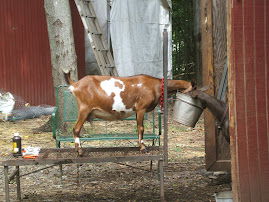
Prairie Breeze is made by Milton Creamery in Milton, Iowa. Milton Creamery sources its milk from five local Amish family dairy farms where the cows are milked by hand. The milk is of exceptional quality and produced using time honored methods. The cows graze on grass seasonally and are not treated with rBST.
Much like the farms producing their milk, Milton Creamery is a family business. Husband, wife, and children are involved in the business. Owner, Rufus Musser grew up in Lebanon County, Pennsylvania and in 1992 moved to southeast Iowa with his wife and five children. Rufus was approached by two Amishmen in 2002 who wanted Rufus to buy their milk and use it to make cheese. They started making Cheddar and fresh curds and their first batch of cheese was made on May 8, 2006. They now make Colby as well as some flavored Cheddars, Prairie Breeze and Prairie Rose.
In February 2007, Rufus's 16 year old son Galen took over the cheese making process enabling Rufus to focus on marketing and deliveries. I am amazed that such a young person is making such incredible cheese. Prairie Breeze and Prairie Rose were introduced in the late summer of 2007 and have been getting a lot of attention. It helps that they use exceptional milk and traditional methods to produce such delicious cheeses.
Prairie Breeze is a rindless cheddar that is aged for a minimum of six months. The block I enjoyed was made in the spring of 2008, giving it additional time to develop yummy flavor crystals. This cheddar is creamy and cruchy with notes of nuts, a touch of salt and a hint of sweetness and pineapple. This cheese pairs well with Champagne, Cabernet Sauvignon, Chardonnay, and your favorite beer.
When I first saw this cheese I couldn't help thinking, "Oh great, another Cheddar, just what we need". After tasting this cheese I was really surprised by how much I enjoyed it. I think this Cheddar differs from others because of the milk, the hand milking of the cows, the short distance the milk travels to the Creamery as well as the traditional time consuming methods that are used to make this cheese. If you come across this Cheddar, give it a try. I think you will be pleasantly surprised.
Showing posts with label review. Show all posts
Showing posts with label review. Show all posts
Monday, March 1, 2010


Monday, February 15, 2010
Midnight Moon
I take cheese for granted, I always expect to find a large cheese selection from all over the world and not just from cow's milk wherever I go out food shopping. I grew up in a family where Pate, cornishons, and Chevre were present at every family gathering. I lived in a large city, Philadelphia, that had a number of cheese shops where even some of the small corner delis carried excellent cheese. I cannot imagine a time where cheese was limited, bland, and boring. But that time was not too long ago and the market for cheese in America was very limited. People wanted Colby not Brie, Cheddar not Chevre, Velvetta not Pecorino.
One of the women at the forefront of the American cheese revolution was Mary Keehn. She was a mother looking for a milk substitute for her children who had difficulty digesting cow's milk. Many people have issues with cow's milk and find goat milk to be a wonderful alternative. So Mary got a few goats and soon became a premiere goat breeder. With 50 goats she soon found that she had way too much milk and needed an outlet for the surplus. In 1983, I was a mere three years old, she started Cypress Grove.
It took a number of years before her cheese was accepted in the United States. She used the time to learn about cheese, care for her goats, land, and her small clientele. Speaking no French, she traveled to France and fell in love with the soft cheeses of France. She learned to make bloomy-rinded cheeses despite the language barrier.
In 2003 she sold off her goats to focus on making and selling cheese. The market for cheese in America had grown exponentially and Mary's cheeses were extremely popular. Cypress Grove makes many award winning cheeses such as Humboldt Fog, Purple Haze, Lamb Chopper, and Midnight Moon. Midnight Moon is one of my favorite all time cheeses, I love its flavor and texture.
Whenever someone comes up to my cheese counter and admits that they do not like goat cheese, I give them a taste of Midnight Moon. I often don't tell them it is a goat cheese until after they taste. So far, everyone has liked it and no one has yet to be upset that I forced them to eat goat cheese. When people hear goat cheese they think of a fresh tangy chevre but that is just one style of goat cheese. Midnight Moon is nothing like chevre, it is more akin to a Dutch Gouda and for very good reasons.
Cypress Grove started a production line in Holland, Cypress Crove Creamline. In 1992 they began producing Midnight Moon and Lambchopper. This was a time when Cypress Grove was outgrowing its Californian cheese making plant but was unable to financially expand beyond making fresh cheese. Cypress Grove Creamline was able to increase profits and offer great cheeses with a smaller financial investment.
Midnight Moon and Lambchopper are made following a Dutch Gouda recipe. This cheese was conceived in California and produced in Holland. Midnight Moon is encased in wax and develops a sweetness as it ages. This cheese is aged for a minimum of six months and during this time, the magic happens. This time allows the cheese to develop a sweetness but also pockets of salty crunch that are actually concentrated proteins. I love a cheese with a salty crystalline crunch. Midnight Moon has notes of caramel, brown butter, and nuts with a dense and creamy texture.
This cheese is wonderful on its own or served with walnut raisin bread or melted in an omelet. This cheese will pair well with many styles of wine such as Rose, Sauvignon Blanc, Pinot Grigio, Syrah, Pinot Noir, Chardonnay, Cabernet Franc, Dry Sherry, Gewürztraminer, Zinfandel, and Cabernet Sauvignon.
One of the women at the forefront of the American cheese revolution was Mary Keehn. She was a mother looking for a milk substitute for her children who had difficulty digesting cow's milk. Many people have issues with cow's milk and find goat milk to be a wonderful alternative. So Mary got a few goats and soon became a premiere goat breeder. With 50 goats she soon found that she had way too much milk and needed an outlet for the surplus. In 1983, I was a mere three years old, she started Cypress Grove.
It took a number of years before her cheese was accepted in the United States. She used the time to learn about cheese, care for her goats, land, and her small clientele. Speaking no French, she traveled to France and fell in love with the soft cheeses of France. She learned to make bloomy-rinded cheeses despite the language barrier.
In 2003 she sold off her goats to focus on making and selling cheese. The market for cheese in America had grown exponentially and Mary's cheeses were extremely popular. Cypress Grove makes many award winning cheeses such as Humboldt Fog, Purple Haze, Lamb Chopper, and Midnight Moon. Midnight Moon is one of my favorite all time cheeses, I love its flavor and texture.
Whenever someone comes up to my cheese counter and admits that they do not like goat cheese, I give them a taste of Midnight Moon. I often don't tell them it is a goat cheese until after they taste. So far, everyone has liked it and no one has yet to be upset that I forced them to eat goat cheese. When people hear goat cheese they think of a fresh tangy chevre but that is just one style of goat cheese. Midnight Moon is nothing like chevre, it is more akin to a Dutch Gouda and for very good reasons.
Cypress Grove started a production line in Holland, Cypress Crove Creamline. In 1992 they began producing Midnight Moon and Lambchopper. This was a time when Cypress Grove was outgrowing its Californian cheese making plant but was unable to financially expand beyond making fresh cheese. Cypress Grove Creamline was able to increase profits and offer great cheeses with a smaller financial investment.
Midnight Moon and Lambchopper are made following a Dutch Gouda recipe. This cheese was conceived in California and produced in Holland. Midnight Moon is encased in wax and develops a sweetness as it ages. This cheese is aged for a minimum of six months and during this time, the magic happens. This time allows the cheese to develop a sweetness but also pockets of salty crunch that are actually concentrated proteins. I love a cheese with a salty crystalline crunch. Midnight Moon has notes of caramel, brown butter, and nuts with a dense and creamy texture.
This cheese is wonderful on its own or served with walnut raisin bread or melted in an omelet. This cheese will pair well with many styles of wine such as Rose, Sauvignon Blanc, Pinot Grigio, Syrah, Pinot Noir, Chardonnay, Cabernet Franc, Dry Sherry, Gewürztraminer, Zinfandel, and Cabernet Sauvignon.
Wednesday, February 3, 2010
Garrotxa
Garrotxa is a goat’s milk cheese from Spain which is made in the northern region of Catalonia in Girona. This region is unpolluted, mountainous, and rainy. The high rainfall provides rich lush grasses for grazing goats which makes for excellent milk.
Many believe Garrotxa is a new cheese but it is actually a lost cheese. After the Spanish Civil War and World War II, Spain was struggling with poverty. The Spanish government implemented a policy that basically outlawed small scale farming and production. Limits were placed on milk production forcing dairies to produce large quantities or cease production. This forced many small scale cheese producers underground and some cheese disappeared completely. In the 1990’s, the traditional recipe for Garrotxa was found and Garrotxa was resurrected.
Garrotxa is made using traditional methods with a modern twist. This cheese is aged for 4 months during which time it develops its natural rind which has a velvety texture and blue grey color. These small wheels of cheese are compact and semi-soft. The paste is snow white, smooth, creamy, and slightly flaky. The taste has notes of hazelnuts, lemon, and herbs. This cheese melts on the tongue and has a smooth finish. This cheese pairs well with sparkling wines, Albarino, Tempranillo, Grenache, Sauvignon Blanc, and Chardonnay.
Many believe Garrotxa is a new cheese but it is actually a lost cheese. After the Spanish Civil War and World War II, Spain was struggling with poverty. The Spanish government implemented a policy that basically outlawed small scale farming and production. Limits were placed on milk production forcing dairies to produce large quantities or cease production. This forced many small scale cheese producers underground and some cheese disappeared completely. In the 1990’s, the traditional recipe for Garrotxa was found and Garrotxa was resurrected.
Garrotxa is made using traditional methods with a modern twist. This cheese is aged for 4 months during which time it develops its natural rind which has a velvety texture and blue grey color. These small wheels of cheese are compact and semi-soft. The paste is snow white, smooth, creamy, and slightly flaky. The taste has notes of hazelnuts, lemon, and herbs. This cheese melts on the tongue and has a smooth finish. This cheese pairs well with sparkling wines, Albarino, Tempranillo, Grenache, Sauvignon Blanc, and Chardonnay.
Tuesday, February 2, 2010
You Don't Know Jack
Only a few styles of cheese have originated in the United States. They include Brick, Colby, and Jack. Most of us are familiar with Monterey jack cheese as a young, mild semi-firm cow’s milk cheese. Since 1931 Vella cheese Company has been making a different kind of jack, Dry Jack. This Jack is aged for at least 7 to 10 months in order to develop a firm texture and a sweet nutty flavor. This cheese is great for grating, cooking, and snacking. Dry jack won the International Gold Medal in 1988 and the Gold Medal at the 2004 Los Angeles County Fair.
Vella Cheese Company began making cheese in 1931. The company started in response to abuses farmers encounter when selling their milk to the Sonoma Mission Cheese Company. Many local dairy farmers were not getting paid for their milk and wanted a new cheese company to buy their milk. The farmer’s approached Tom Vella to open a cheese factor and the farmers would give him the exclusive use of all their milk.
Vella Cheese Company started as a factory but they maintained their relationships with the local dairy’s whose milk they used. They still maintain these close relationships and the milk used for making cheese is never more than twelve hours old. Vella Cheese understands the importance of great fresh local milk and it shows in their cheeses. Now Tom’s son Ig is running the family business.
Dry Jack was created to satisfy the demands of Italian immigrants for cheese. During World War I, many popular Italian grating cheeses like Parmigiano-Reggiano and Pecornio Romano were no longer available in the United States. As refrigeration was also hard to come, the cheese had to be shelf stable and Mezzo Secco and Dry Jack were born. Mezzo Secco was discontinued in 1999 but Dry Jack is still going strong.
Dry Jack is hand-shaped in cheesecloth bags, then tied and pressed overnight. This creates a belly button impression in the middle of the wheel of cheese. The wheels are then brined for a few days and then air dried for a few weeks. The wheels are rubbed with Vella’s signature cure which is a mixture of unsweetened cocoa, black pepper, and soybean or safflower oil. Unlike Cocoa Cardona, the cocoa is not being used to flavor the cheese but to protect the rind. The oil prevents the wheels from cracking and the pepper and cocoa keep the oil in suspension and prevent flavors from penetrating the paste of the cheese. This enables the cheese to age for 16 months or more.
This cheese has a mild nature and is well balanced with notes of fruit and coconut oil. The texture is hard and crumbly with a rich flavor. This cheese is very wine friendly and will pair well with Merlot, Zinfandel, Syrah, Pinot Noir, Cabernet, Chardonnay, and Sparkling wines as well as beer and whiskey.
Vella Cheese Company began making cheese in 1931. The company started in response to abuses farmers encounter when selling their milk to the Sonoma Mission Cheese Company. Many local dairy farmers were not getting paid for their milk and wanted a new cheese company to buy their milk. The farmer’s approached Tom Vella to open a cheese factor and the farmers would give him the exclusive use of all their milk.
Vella Cheese Company started as a factory but they maintained their relationships with the local dairy’s whose milk they used. They still maintain these close relationships and the milk used for making cheese is never more than twelve hours old. Vella Cheese understands the importance of great fresh local milk and it shows in their cheeses. Now Tom’s son Ig is running the family business.
Dry Jack was created to satisfy the demands of Italian immigrants for cheese. During World War I, many popular Italian grating cheeses like Parmigiano-Reggiano and Pecornio Romano were no longer available in the United States. As refrigeration was also hard to come, the cheese had to be shelf stable and Mezzo Secco and Dry Jack were born. Mezzo Secco was discontinued in 1999 but Dry Jack is still going strong.
Dry Jack is hand-shaped in cheesecloth bags, then tied and pressed overnight. This creates a belly button impression in the middle of the wheel of cheese. The wheels are then brined for a few days and then air dried for a few weeks. The wheels are rubbed with Vella’s signature cure which is a mixture of unsweetened cocoa, black pepper, and soybean or safflower oil. Unlike Cocoa Cardona, the cocoa is not being used to flavor the cheese but to protect the rind. The oil prevents the wheels from cracking and the pepper and cocoa keep the oil in suspension and prevent flavors from penetrating the paste of the cheese. This enables the cheese to age for 16 months or more.
This cheese has a mild nature and is well balanced with notes of fruit and coconut oil. The texture is hard and crumbly with a rich flavor. This cheese is very wine friendly and will pair well with Merlot, Zinfandel, Syrah, Pinot Noir, Cabernet, Chardonnay, and Sparkling wines as well as beer and whiskey.
Thursday, January 14, 2010
Roaring 40's blue cheese
Roaring 40’s is a blue cow’s milk cheese from King Island Dairy. King Island Dairy is located on King Island which is south of Melbourne, Australia in the Great Southern Ocean. King Island is one of the few remaining remnants of the land bridge that once linked Tasmania and Australia. King Island has pristine land but is plagued by fierce westerly winds which blow down form the 40 degree longitude which can cause treacherous seas. These winds came to be know by sailors as the roaring 40’s which is where this cheese gets its name.
These winds were also responsible for the shipwreck of many ships and many sailors lost their lives. These tragedies have affected the terrain of this small island. As many ships were destroyed near King Island, different things washed ashore, among these were straw beds. The seeds inside these beds began to germinate and spread across the island. This created extremely lush and pristine pastures.
Due to the Island’s climate, cows can be on pasture year round. The only thing that supplements their diet is kelp which has washed up on shore. King Island cows are well known for producing milk that is sweet, creamy, and pure. This milk goes into making all of King Island Dairy’s line of cheeses.
This unusual blue won “Champion Cheese” as the 2002 New York Fancy Food Show and was the 2006 Champion at the 78th Annual British Empire Cheese Show in Ontario, Canada. There are less than 2,000 people currently living on King Island. This has enable the Island to maintain its pristine pastures and avoid many pollution pitfalls.
Roaring 40’s is a rindless blue cheese that is matured in black wax to maintain moisture to create a smooth and creamy cheese. Very few blue cheeses are coated in wax but this cheese benefits greatly from its coating. This cheese has notes of honey and nuts which is balanced by minerality. This cheese will pair well with a smoky Australian Shiraz, dessert and fortified wines, Riesling, Gewurztrminer, Sauvignon Blanc, and Chenin Blanc. Try this cheese on a whole wheat cracker, currant bread, or Raincoast Crisps. You can also drizzle this cheese in honey or pair it with pears and walnuts.
These winds were also responsible for the shipwreck of many ships and many sailors lost their lives. These tragedies have affected the terrain of this small island. As many ships were destroyed near King Island, different things washed ashore, among these were straw beds. The seeds inside these beds began to germinate and spread across the island. This created extremely lush and pristine pastures.
Due to the Island’s climate, cows can be on pasture year round. The only thing that supplements their diet is kelp which has washed up on shore. King Island cows are well known for producing milk that is sweet, creamy, and pure. This milk goes into making all of King Island Dairy’s line of cheeses.
This unusual blue won “Champion Cheese” as the 2002 New York Fancy Food Show and was the 2006 Champion at the 78th Annual British Empire Cheese Show in Ontario, Canada. There are less than 2,000 people currently living on King Island. This has enable the Island to maintain its pristine pastures and avoid many pollution pitfalls.
Roaring 40’s is a rindless blue cheese that is matured in black wax to maintain moisture to create a smooth and creamy cheese. Very few blue cheeses are coated in wax but this cheese benefits greatly from its coating. This cheese has notes of honey and nuts which is balanced by minerality. This cheese will pair well with a smoky Australian Shiraz, dessert and fortified wines, Riesling, Gewurztrminer, Sauvignon Blanc, and Chenin Blanc. Try this cheese on a whole wheat cracker, currant bread, or Raincoast Crisps. You can also drizzle this cheese in honey or pair it with pears and walnuts.
Saturday, December 19, 2009
The King of English Cheese and the Wine of Philosophy
Stilton is a classic cheese for the Christmas season which can be made more indulgent by pairing it with Port. There is a Christmas tradition of scoping out a wheel of Stilton and pouring in Port. This website http://fxcuisine.com/default.asp?Display=233 has a wonderfully detailed description of this process. They state that a “head of Stilton will take 2 weeks to drink a bottle of Port”.
Stilton was created in the early 18th century in the midlands of England. Stilton was named after the town of Stilton which is 80 miles north of London. Legend has it that in 1730 Cooper Thornhill, owner of the Bell Inn in the village of Stilton, discovered this blue cheese while visiting Leicestershire. He fell in love with the cheese and was granted full marketing rights to blue Stilton. The Bell Inn was located near a major stagecoach route between London and Northern England which helped to advance the popularity of the cheese. Frances Pawlett was a skilled cheesemaker in Wymondham who is credited with setting the standards for Stilton. Frances and her husband organized the first cooperative in the area to produce Stilton. Together, Thornhill and Pawlett helped to build the reputation and popularity of Stilton.
The Stilton Cheesemakers Association was formed in 1936 to lobby for regulations to protect the origin and quality of the cheese. Stilton was granted legal protection with a certification trademark 30 years later in 1966 and was the only British cheese to have this status. As Stilton has a Protected Geographical Status (POD), there are specific guidelines for its making. Stilton can only be made by authorized creameries in Leicestershire, Nottinghamshire, and Derbyshire. Stilton can no longer be legally made in the town of Stilton as it is not in one of the 3 permitted counties. There are only 6 creameries currently producing Stilton. Stilton can only be made from local pasteurized milk. Stilton can only be made in the traditional cylindrical shape and it must develop its own coat or crust on the outer rind. Stilton is never pressed and has delicate blue veins radiating from its center. Stilton will have a typical fat content of 35% and protein content is 23%.
Stilton is considered the King of English cheeses. The British enjoy their cheese and cheese has become a part of their popular culture. Most of us are familiar with the Monty Python cheese shop sketch and Wallace & Gromit and their cheese loving ways. The British Cheese Board conducted a survey in 2005 that reported 75% of men and 85% of women experienced “odd and vivid” dreams after eating a 20 gram serving of Stilton half an hour prior to bedtime. Try some Stilton before bedtime and be sure to keep your dream journal by your bedside to capture those vivid dreams upon waking.
When storing Stilton, keep it tightly wrapped and store in an air tight container. This will prevent your cheese from drying out and protect your other food items from being tainted by blue mold. This cheese will keep in the fridge for weeks and it will continue to mature as it ages becoming more intense in flavor. I do not often advocate the freezing of cheese but as the Stilton cheese website, http://www.stiltoncheese.com/using_stilton, states it “freezes beautifully. Simply cut into easy to handle portions, wrap in cling film or foil and freeze for up to 3 months. De-frost slowly – preferably in the fridge overnight. Allow to reach room temperature before serving.”
Stilton pairs well with pears, celery, walnuts, and charcuterie. It can be added to sauces, soups, salads, and burgers. Stilton can top a steak, cracker, or bread. Stilton enjoys sweet accompaniments so experiment with chutneys and sweet breads or crackers. Stilton pairs well with sweet wines, sherry, and Shiraz. Port is the preferred drink to enhance Stilton so let us explore Port.
The origins of Port lie in the Douro Valley of Portugal. It is a fortified wine which means grape spirit is added during fermentation to halt the fermentation process. This leaves the wine with more residual sugar and higher alcohol content. This made shipping Port from Portugal to England much easier as the alcohol and sugar increase its shelf life.
Port is very sweet and usually served after dinner with dessert. There are several styles of Port and The Vineyard offers a wide variety for you to choose from. Any Port will pair perfectly with Stilton. Port and Stilton are a classic match because they provide a wonderful balance for each other. The sweetness of the Port is balanced by the saltiness of the cheese. The flavors combine on the tongue to form a unique flavor.
Port should be served at a temperature between 65 and 68 degrees Fahrenheit. Your glass should be filled no more than half way to appreciate its aroma. Most Ports can be enjoyed after opening but Vintage Ports require decanting. To decant a Vintage Port, stand the bottle upright for at least 24 hours and up to one week, to allow time for the sediment to settle to the bottom. If the cork breaks, strain the wine while decanting but do not use paper filters as it will affect the flavor. If you love Sabrage service for opening Champagne, you can open your Port with traditional Port tongs. The tongs are heated to red hotness then clamped around the neck of the bottle below the cork and above the shoulder of the bottle for 1 to 2 minutes. Then apply a wet towel to the same spot and the rapid change in temperature will cause the glass to cleanly break.
Port is traditionally served at the end of a meal and leisurely enjoyed. Port can have a warm calming affect and is considered the “wine of philosophy". Contemplatively sip your Port and nibble your Stilton and enjoy stimulating conversations. Maybe Mr. Chesterton was sipping Port and enjoying Stilton when he wrote his Sonnet to a Stilton Cheese.
Sonnet to a Stilton Cheese:
Stilton, thou shouldst be living at this hour
And so thou art. Nor losest grace thereby;
England has need of thee, and so have I–
She is a Fen. Far as the eye can scour,
League after grassy league from Lincoln tower
To Stilton in the fields, she is a Fen.
Yet this high cheese, by choice of fenland men,
Like a tall green volcano rose in power.
Plain living and long drinking are no more,
And pure religion reading “Household Words”,
And sturdy manhood sitting still all day
Shrink, like this cheese that crumbles to its core;
While my digestion, like the House of Lords,
The heaviest burdens on herself doth lay.
- G.K. Chesterton
Stilton and Port are wonderful for cooking and baking, together and on their own. Last Christmas I made this wonderful Pear, Walnut, and Blue Cheese Crumble. I have included this recipe and others below. Happy Holidays.
Pear, Walnut and Blue Cheese Crumble
http://www.foodnetwork.com/recipes/emeril-lagasse/pear-walnut-and-blue-cheese-crumble-recipe/index.html
• 6 large pears, peeled, cored, and sliced
• 1 tablespoon fresh lemon juice
• 1/2 cup plus 1 tablespoon flour
• 1/4 cup sugar
• 2 tablespoons Ruby Port
• 1/2 cup finely chopped walnuts
• 1/4 cup light brown sugar
• 1/2 teaspoon salt
• 6 tablespoons unsalted butter, cut into pieces
• 3/4 cup crumbled blue cheese
Directions
Preheat the oven to 350 degrees F. Lightly grease a 9-inch baking dish with butter and set aside.
In a bowl, toss the pear slices with the lemon juice. Add 1 tablespoon flour, the sugar, and port, and toss to combine. Arrange in the prepared dish. In a bowl, combine the remaining 1/2 cup flour, finely chopped walnuts, brown sugar and salt. Add the butter, working in with your fingertips until it resembles coarse crumbs. Sprinkle over the pear mixture. Bake until the pears are tender, the juices bubble, and the crust is golden, 40 to 45 minutes.
Remove from the oven and sprinkle the cheese over the top. Cook until the cheese is melted, about 5 minutes. Remove from the oven and let sit for 10 minutes before serving.
Aged Blue Stilton and Port Souffle
http://www.thomashoestevenson.com/downloads/recipe_3_US.pdf
Serves 1
85g/3oz Aged Blue Stilton®
2 tbsp Port
3tbsp heavy whipping cream
1 egg yolk
3 egg whites
1 tbsp lemon juice
1) Preheat the oven to 200°C/400°F. Place the Aged Blue Stilton®, Port and cream into a non-stick ovenproof skillet. Heat gently untill
the cheese has melted and the mixture is smooth. Remove from the heat and stir in the egg yolk.
2) In a bowl, whisk the egg whites with the lemon juice until stiff peaks form when the whisk is removed. Fold the egg whites into the
cheese mixture.
3) Transfer to a ramekin dish and bake in the oven for 6-8 minutes, or until well-risen and lightly golden on top.
Port & Stilton Sauce
http://www.ochef.com/801.htm Adapted from the Dairy Book of Home Cookery — Everyday Specials
Ingredients:
4 ounces (125 grams) Blue Stilton
6 tablespoons of mascarpone cheese
3 tablespoons of Port
3 tablespoons pine nuts
Instructions:
Blend the cheeses and port in a food processor or blender. Put the mixture into a saucepan and heat gently until melted and bubbling; add already warmed pine nuts and seasoning to taste.
If you are serving the sauce with steaks, cook the steaks and add them to the sauce and cook for a further 1-1/2 minutes. Garnish with parsley and serve with a selection of traditional vegetables.
Stilton, Port and Walnut Paté
http://gloriousfoodandwinerecipes.blogspot.com/2006/12/stilton-and-port.html
225gr Stilton
50gr unsalted butter
3 tbsp Port
125gr chopped walnuts
Place the cheese, butter and Port in a food processor until the mixture is smooth. Transfer the mixture to a mixing bowl and add the walnuts, mix. Place the paté in a serving bowl, cover with cling film and chill till ready to serve.
Stilton was created in the early 18th century in the midlands of England. Stilton was named after the town of Stilton which is 80 miles north of London. Legend has it that in 1730 Cooper Thornhill, owner of the Bell Inn in the village of Stilton, discovered this blue cheese while visiting Leicestershire. He fell in love with the cheese and was granted full marketing rights to blue Stilton. The Bell Inn was located near a major stagecoach route between London and Northern England which helped to advance the popularity of the cheese. Frances Pawlett was a skilled cheesemaker in Wymondham who is credited with setting the standards for Stilton. Frances and her husband organized the first cooperative in the area to produce Stilton. Together, Thornhill and Pawlett helped to build the reputation and popularity of Stilton.
The Stilton Cheesemakers Association was formed in 1936 to lobby for regulations to protect the origin and quality of the cheese. Stilton was granted legal protection with a certification trademark 30 years later in 1966 and was the only British cheese to have this status. As Stilton has a Protected Geographical Status (POD), there are specific guidelines for its making. Stilton can only be made by authorized creameries in Leicestershire, Nottinghamshire, and Derbyshire. Stilton can no longer be legally made in the town of Stilton as it is not in one of the 3 permitted counties. There are only 6 creameries currently producing Stilton. Stilton can only be made from local pasteurized milk. Stilton can only be made in the traditional cylindrical shape and it must develop its own coat or crust on the outer rind. Stilton is never pressed and has delicate blue veins radiating from its center. Stilton will have a typical fat content of 35% and protein content is 23%.
Stilton is considered the King of English cheeses. The British enjoy their cheese and cheese has become a part of their popular culture. Most of us are familiar with the Monty Python cheese shop sketch and Wallace & Gromit and their cheese loving ways. The British Cheese Board conducted a survey in 2005 that reported 75% of men and 85% of women experienced “odd and vivid” dreams after eating a 20 gram serving of Stilton half an hour prior to bedtime. Try some Stilton before bedtime and be sure to keep your dream journal by your bedside to capture those vivid dreams upon waking.
When storing Stilton, keep it tightly wrapped and store in an air tight container. This will prevent your cheese from drying out and protect your other food items from being tainted by blue mold. This cheese will keep in the fridge for weeks and it will continue to mature as it ages becoming more intense in flavor. I do not often advocate the freezing of cheese but as the Stilton cheese website, http://www.stiltoncheese.com/using_stilton, states it “freezes beautifully. Simply cut into easy to handle portions, wrap in cling film or foil and freeze for up to 3 months. De-frost slowly – preferably in the fridge overnight. Allow to reach room temperature before serving.”
Stilton pairs well with pears, celery, walnuts, and charcuterie. It can be added to sauces, soups, salads, and burgers. Stilton can top a steak, cracker, or bread. Stilton enjoys sweet accompaniments so experiment with chutneys and sweet breads or crackers. Stilton pairs well with sweet wines, sherry, and Shiraz. Port is the preferred drink to enhance Stilton so let us explore Port.
The origins of Port lie in the Douro Valley of Portugal. It is a fortified wine which means grape spirit is added during fermentation to halt the fermentation process. This leaves the wine with more residual sugar and higher alcohol content. This made shipping Port from Portugal to England much easier as the alcohol and sugar increase its shelf life.
Port is very sweet and usually served after dinner with dessert. There are several styles of Port and The Vineyard offers a wide variety for you to choose from. Any Port will pair perfectly with Stilton. Port and Stilton are a classic match because they provide a wonderful balance for each other. The sweetness of the Port is balanced by the saltiness of the cheese. The flavors combine on the tongue to form a unique flavor.
Port should be served at a temperature between 65 and 68 degrees Fahrenheit. Your glass should be filled no more than half way to appreciate its aroma. Most Ports can be enjoyed after opening but Vintage Ports require decanting. To decant a Vintage Port, stand the bottle upright for at least 24 hours and up to one week, to allow time for the sediment to settle to the bottom. If the cork breaks, strain the wine while decanting but do not use paper filters as it will affect the flavor. If you love Sabrage service for opening Champagne, you can open your Port with traditional Port tongs. The tongs are heated to red hotness then clamped around the neck of the bottle below the cork and above the shoulder of the bottle for 1 to 2 minutes. Then apply a wet towel to the same spot and the rapid change in temperature will cause the glass to cleanly break.
Port is traditionally served at the end of a meal and leisurely enjoyed. Port can have a warm calming affect and is considered the “wine of philosophy". Contemplatively sip your Port and nibble your Stilton and enjoy stimulating conversations. Maybe Mr. Chesterton was sipping Port and enjoying Stilton when he wrote his Sonnet to a Stilton Cheese.
Sonnet to a Stilton Cheese:
Stilton, thou shouldst be living at this hour
And so thou art. Nor losest grace thereby;
England has need of thee, and so have I–
She is a Fen. Far as the eye can scour,
League after grassy league from Lincoln tower
To Stilton in the fields, she is a Fen.
Yet this high cheese, by choice of fenland men,
Like a tall green volcano rose in power.
Plain living and long drinking are no more,
And pure religion reading “Household Words”,
And sturdy manhood sitting still all day
Shrink, like this cheese that crumbles to its core;
While my digestion, like the House of Lords,
The heaviest burdens on herself doth lay.
- G.K. Chesterton
Stilton and Port are wonderful for cooking and baking, together and on their own. Last Christmas I made this wonderful Pear, Walnut, and Blue Cheese Crumble. I have included this recipe and others below. Happy Holidays.
Pear, Walnut and Blue Cheese Crumble
http://www.foodnetwork.com/recipes/emeril-lagasse/pear-walnut-and-blue-cheese-crumble-recipe/index.html
• 6 large pears, peeled, cored, and sliced
• 1 tablespoon fresh lemon juice
• 1/2 cup plus 1 tablespoon flour
• 1/4 cup sugar
• 2 tablespoons Ruby Port
• 1/2 cup finely chopped walnuts
• 1/4 cup light brown sugar
• 1/2 teaspoon salt
• 6 tablespoons unsalted butter, cut into pieces
• 3/4 cup crumbled blue cheese
Directions
Preheat the oven to 350 degrees F. Lightly grease a 9-inch baking dish with butter and set aside.
In a bowl, toss the pear slices with the lemon juice. Add 1 tablespoon flour, the sugar, and port, and toss to combine. Arrange in the prepared dish. In a bowl, combine the remaining 1/2 cup flour, finely chopped walnuts, brown sugar and salt. Add the butter, working in with your fingertips until it resembles coarse crumbs. Sprinkle over the pear mixture. Bake until the pears are tender, the juices bubble, and the crust is golden, 40 to 45 minutes.
Remove from the oven and sprinkle the cheese over the top. Cook until the cheese is melted, about 5 minutes. Remove from the oven and let sit for 10 minutes before serving.
Aged Blue Stilton and Port Souffle
http://www.thomashoestevenson.com/downloads/recipe_3_US.pdf
Serves 1
85g/3oz Aged Blue Stilton®
2 tbsp Port
3tbsp heavy whipping cream
1 egg yolk
3 egg whites
1 tbsp lemon juice
1) Preheat the oven to 200°C/400°F. Place the Aged Blue Stilton®, Port and cream into a non-stick ovenproof skillet. Heat gently untill
the cheese has melted and the mixture is smooth. Remove from the heat and stir in the egg yolk.
2) In a bowl, whisk the egg whites with the lemon juice until stiff peaks form when the whisk is removed. Fold the egg whites into the
cheese mixture.
3) Transfer to a ramekin dish and bake in the oven for 6-8 minutes, or until well-risen and lightly golden on top.
Port & Stilton Sauce
http://www.ochef.com/801.htm Adapted from the Dairy Book of Home Cookery — Everyday Specials
Ingredients:
4 ounces (125 grams) Blue Stilton
6 tablespoons of mascarpone cheese
3 tablespoons of Port
3 tablespoons pine nuts
Instructions:
Blend the cheeses and port in a food processor or blender. Put the mixture into a saucepan and heat gently until melted and bubbling; add already warmed pine nuts and seasoning to taste.
If you are serving the sauce with steaks, cook the steaks and add them to the sauce and cook for a further 1-1/2 minutes. Garnish with parsley and serve with a selection of traditional vegetables.
Stilton, Port and Walnut Paté
http://gloriousfoodandwinerecipes.blogspot.com/2006/12/stilton-and-port.html
225gr Stilton
50gr unsalted butter
3 tbsp Port
125gr chopped walnuts
Place the cheese, butter and Port in a food processor until the mixture is smooth. Transfer the mixture to a mixing bowl and add the walnuts, mix. Place the paté in a serving bowl, cover with cling film and chill till ready to serve.
Saturday, September 26, 2009
Laloo’s Goat Milk Ice Cream
Last night I was at Wegman’s in the natural foods section and I found Laloo’s Goat Milk Ice Cream. There were flavors like Black Mission Fig, Deep Chocolate, Rumplemint, and Strawberry Darling. I am not much for strawberry ice cream but I picked the Strawberry Darling because it wasn’t just strawberry. This pint had a balsamic vinegar swirl.
Later that evening, I served this ice cream to some dinner guests without telling anyone it was made from goat’s milk. One of my guests that evening was a five year old boy. I was very curious to see his reaction and he really seemed to like it! Everyone enjoyed the ice cream and was surprised when I told them it was made from goat’s milk.
The flavor was rich, creamy, and tart. There were chunks of strawberries and plenty of balsamic vinegar. Best of all, this ice cream has a short ingredient list with only nine in total. Their website,
http://www.laloos.com/index.php
states the ice cream is “naturally low fat, lactose friendly”. With only 5 grams of fat and 130 calories per ½ cup serving, it is almost low fat. Low fat is usually considered 3 grams of fat or less. But considering Ben & Jerry’s Strawberry Ice Cream has 9 grams of fat, I think their low fat claim is valid. Their website claims that their ice cream is made “the farmstead way by hand with love from natural ingredients that are locally produced in
The start of this company has roots in the Slow Food movement. Laura Howard was an entertainment executive in
She compares goat’s milk to mother’s milk as its chemical structure is similar. Laura states that goat’s milk “is a complete protein containing all the essential amino acids without the heavy fat content and catarrh producing materials of cow’s milk”. So what is catarrh? It is an excess of mucus and white blood cells caused by a swelling of mucous membranes. I can recall consuming too much ice cream and feeling very phlegmie.
Their website states that “goat’s milk offers superior digestibility to cow’s milk”. Goat’s milk has smaller fat globules allowing more of a surface to volume ratio which allows the goat’s milk to be broken down easily. Goat’s milk also contains more Medium Chain Triglycerides (MCT) which can be absorbed more easily. MCT’s also has "a unique ability to provide energy to the human metabolism, as well as an ability to lower, inhibit and dissolve cholesterol deposits”. The casein in goat’s milk can be digested easier than cow’s milk and goat’s milk is lower in lactose. Goat’s milk is a valid and delicious alternative to cow’s milk for those who are lactose intolerant or with certain allergies to cow’s milk. Regardless of any of the science behind this ice cream, it is delicious and worth a taste!
Thursday, September 17, 2009
My New Favorite Cheese
Montasio is an Italian cheese that I first came to know from a book of cheese making recipes. Recently, I tried to make Montasio never having eaten this type of cheese. Unfortunately, that wheel of home made raw Montasio cheese was lost due to some infested goat cheese. This made me very sad as it is a difficult, labor intensive cheese to make. Aside from much stirring and standing over a big hot pot of milk, it had to be brined in two pounds of cheese salt.
Last week I was in Wegman’s and saw a display of Montasio cheese near the deli counter. As this cheese is made from pasteurized cow’s milk and is aged, it can be stored at room temperature. I brought home the cheese and we all fell in love. Patrick typically only enjoys sheep’s milk cheese but had to remark on Montasio’s deliciousness.
It is similar to Parmigiano-Reggiano or Asiago but not as sharp. Montasio has salty pockets of flavor crystals which are actually trapped pockets of protein. It is a hard aged cheese that will sweat a little at room temperature. Its texture is slightly chalky and chewy. Its flavor is nutty, salty, and delicate
Montasio can be eaten alone, grated, and used in fondue. It is traditionally used to make frico which is fried cheese. Montasio is also made in a young fresh variety, Fresco as well as five to ten months mezzano, which I had, and stravecchio which is aged for over ten months. The color will become more golden with age and the flavor will intensify. Montasio has a DOP label which means it has Protected Designation of Origin. Its production must adhere to strict standards to ensure the best quality cheese
Montasio is from the north east corner of Italy in the Friuli-Venezia Guilia region. It lies at the foot of the Alps bordered by Austria and Slovenia. It was first made by Benedictine monks in the 1200’s using sheep’s milk. Montasio cheese will pair well with beer or cider, which is nice when the weather turns colder. It can also stand up to a Merlot or Pinot Grigio.
This cheese even has its own website
http://montasiocheese.com/
Last week I was in Wegman’s and saw a display of Montasio cheese near the deli counter. As this cheese is made from pasteurized cow’s milk and is aged, it can be stored at room temperature. I brought home the cheese and we all fell in love. Patrick typically only enjoys sheep’s milk cheese but had to remark on Montasio’s deliciousness.
It is similar to Parmigiano-Reggiano or Asiago but not as sharp. Montasio has salty pockets of flavor crystals which are actually trapped pockets of protein. It is a hard aged cheese that will sweat a little at room temperature. Its texture is slightly chalky and chewy. Its flavor is nutty, salty, and delicate
Montasio can be eaten alone, grated, and used in fondue. It is traditionally used to make frico which is fried cheese. Montasio is also made in a young fresh variety, Fresco as well as five to ten months mezzano, which I had, and stravecchio which is aged for over ten months. The color will become more golden with age and the flavor will intensify. Montasio has a DOP label which means it has Protected Designation of Origin. Its production must adhere to strict standards to ensure the best quality cheese
Montasio is from the north east corner of Italy in the Friuli-Venezia Guilia region. It lies at the foot of the Alps bordered by Austria and Slovenia. It was first made by Benedictine monks in the 1200’s using sheep’s milk. Montasio cheese will pair well with beer or cider, which is nice when the weather turns colder. It can also stand up to a Merlot or Pinot Grigio.
This cheese even has its own website
http://montasiocheese.com/
Subscribe to:
Posts (Atom)